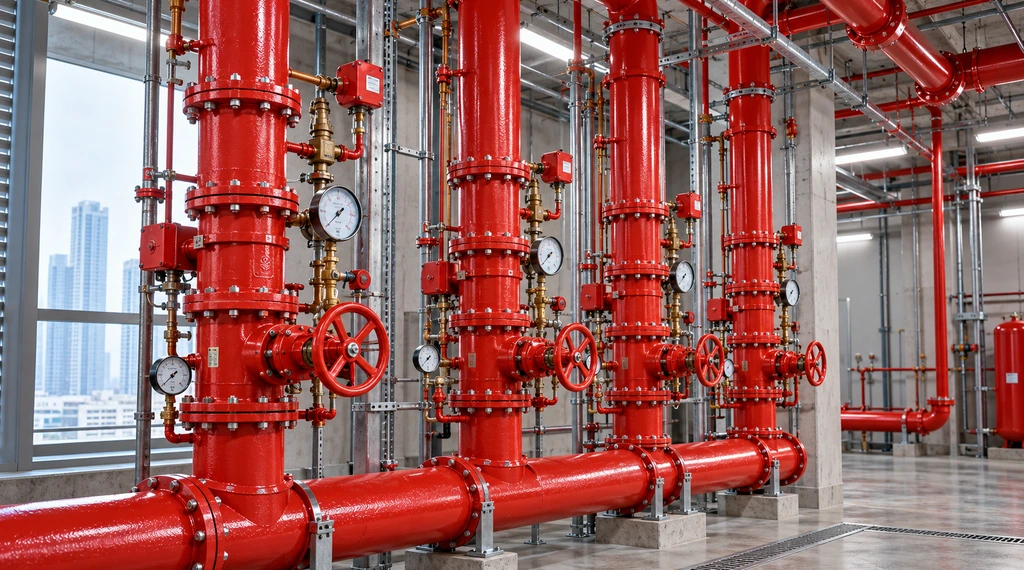
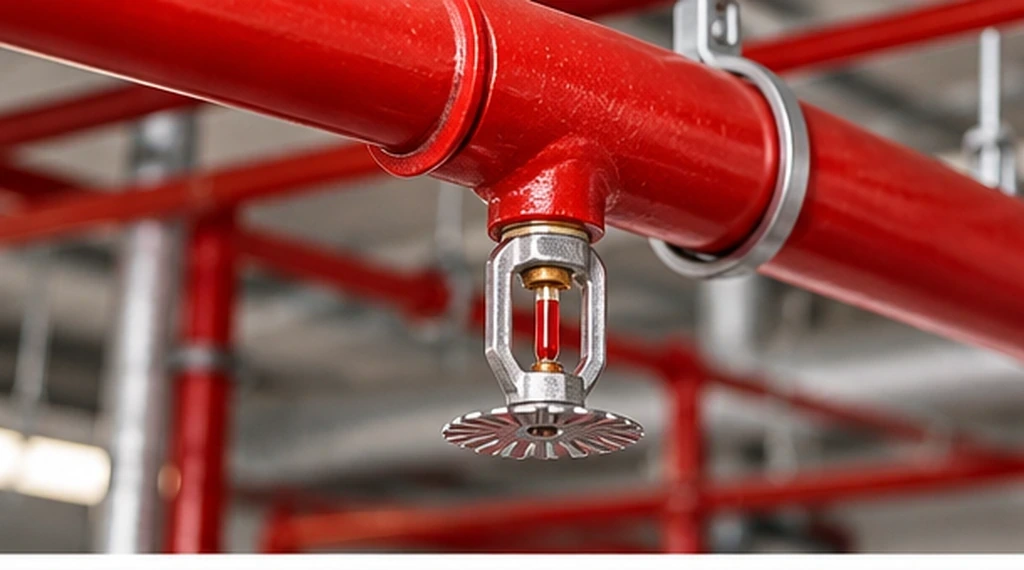
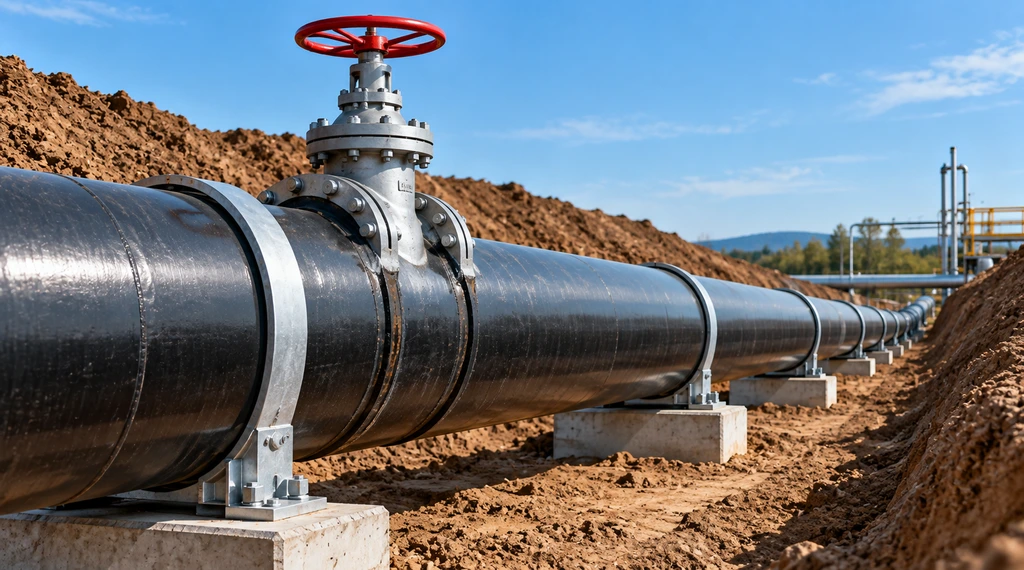
Fire sprinkler pipe hangers transfer the weight of the pipe, water, fittings, and attached equipment into the building structure. A reliable support system therefore depends on pipe material and size, hanger type, spacing, concentrated loads, structural attachments, movement control, and seismic requirements.
A layout can look orderly while still be unsuitable for the pipe material, unable to carry a heavy valve, or lack a verified structural load path. The final arrangement should follow approved drawings, project specifications, applicable national standards, local fire-authority requirements, and component instructions.
The governing route varies by market. European projects may use nationally adopted EN 12845 requirements, while Australian projects may apply AS 2118. Other export markets may combine local rules with NFPA, FM, or contract specifications. The approved project documents determine what governs the installation.
What Do Hangers, Supports, Restraints, and Braces Do?
A hanger suspends pipe from above and primarily carries gravity load. A support is broader and can include hangers, pipe stands, trapezes, and devices supporting vertical risers. A restraint limits unwanted movement at a particular point. Seismic bracing or lateral restraint controls designed movement where the governing project requires it.
| Component | Primary Function | Load-Handling Role | Typical Design Use |
| Hanger | Suspends pipe from above | Primary gravity support | Regular horizontal pipe runs |
| Support | Carries or positions pipe | Depends on support type | Horizontal runs, risers, trapezes, or stands |
| Restraint | Limits local displacement | Normally supplementary to gravity support | Locations where movement must be restricted |
| Seismic bracing | Resists designed lateral movement | Works with gravity support | Seismic restraint zones defined by the design |
These functions are not interchangeable. More gravity hangers do not automatically satisfy seismic requirements, while restraints or braces should not be assumed to carry operating weight unless that load is included in their design.

What Must Be Known Before Selecting Sprinkler Pipe Supports?
Support selection should begin with the piping and project conditions, not a hardware catalogue.
Confirm the pipe material, nominal size (DN/NPS), outside diameter where relevant, wall thickness or schedule, orientation, route, and operating condition. The fire sprinkler pipe may be steel, copper, or an approved nonmetallic system, each with different support behaviour.
For specified steel pipe, use actual project data rather than a generic assumption. An ASTM A135 ERW fire sprinkler pipe may be supplied in different sizes, wall schedules, ends, and finishes; these affect pipe mass and joint arrangement.
Include water, fittings, valves, backflow preventers, alarm assemblies, insulation, and other attached items when assessing concentrated loads.
The available structure then determines how those loads can be transferred. Structural steel, concrete, and wood framing require different connection details. Before finalizing the layout, confirm the governing standard and edition, approved drawings, component approval requirements, corrosion exposure, movement or seismic criteria, concentrated loads, and structural attachment points.
Which Hanger Arrangement Fits Each Piping Condition?
No single hanger type suits every sprinkler layout. The arrangement normally follows pipe orientation, load transfer, and available structure.
| Piping Condition | Typical Arrangement | Main Check |
| Single horizontal steel pipe | Clevis, loop, or ring hanger | Rated load, pipe size, rod size, and environment |
| Several parallel pipes | Trapeze support | Combined load and frame capacity |
| Vertical riser | Riser clamp or approved vertical support | Vertical load and permitted movement |
| Low-level piping | Pipe stand | Base strength, anchorage, and corrosion protection |
| Heavy valve or device | Additional local support where required | Concentrated load and adjacent joint capacity |
| Structural steel attachment | Beam clamp or engineered connection | Flange geometry and load direction |
| Concrete attachment | Approved anchor system | Base material, embedment, spacing, and edge distance |
These are common arrangements, not universal prescriptions. The key question is whether the selected arrangement transfers the actual operating load into an approved structural element without creating unintended load on the pipe or joint.
How Is Sprinkler Hanger Spacing Determined?
Sprinkler hanger spacing should not be selected by copying one maximum value from a generic chart. The approved spacing results from several checks.
Start with the project’s governing requirement, whether from an adopted standard, approved design, calculation method, or certified manufacturer instruction. Confirm the applicable edition before using a spacing value.
Then match the rule to the pipe. Material and nominal size determine which spacing requirement applies, and nonmetallic systems may introduce additional temperature-dependent limits.
The governing maximum spacing can then establish the regular straight-run layout. It is an upper limit for that condition, not the complete support design.
Local geometry may make the spacing more restrictive. Branch-line ends, direction changes, offsets, risers, and flexible connections can require a hanger closer than normal straight-run spacing.
Concentrated loads require a separate check. Heavy valves, backflow devices, alarm assemblies, and large fire pipe fittings should not simply be left to the nearest regular hanger or adjacent joint without verification. Additional or dedicated support may be required where the normal layout cannot demonstrate adequate load transfer.
Connection and movement requirements can also affect the final arrangement. Grooved, threaded, welded, and flanged joints differ in how they are assembled and how movement is accommodated. If the connection method has not yet been finalized, the guide to fire sprinkler pipe connection types can help clarify which joint details should be coordinated with the support layout. Regardless of connection type, the joint itself should not be treated as a substitute for required support.
| Required Field | Why It Matters |
| Pipe material and nominal size | Identifies the spacing basis |
| Governing standard and edition | Establishes the design requirement |
| Straight-run maximum spacing | Defines the normal layout limit |
| Branch ends and direction changes | Identifies local support conditions |
| Valves and concentrated equipment | Triggers additional load review |
| Manufacturer instructions | Captures system-specific limitations |
| Structural and seismic requirements | Confirms the complete arrangement |
The approved layout therefore reflects the governing spacing rule plus local geometry, concentrated loads, movement, and structural checks—not merely one spacing number.

How Should Supports Be Attached to the Building Structure?
Every hanger needs a continuous load path:
pipe → hanger → rod or frame → attachment → building structure
On structural steel, use a compatible beam clamp or engineered connection where permitted. It must fit the member, suit the loading direction, and include required locking features. Drilling or field welding should not occur without authorization.
For concrete, anchor suitability depends on base material, design load, embedment, spacing, edge distance, and installation method. Reinforcement, post-tensioning tendons, and restricted drilling zones should be identified before drilling.
For wood construction, fasteners need adequate penetration and edge distance in a load-bearing member. Ceiling grids, decorative panels, ductwork, cable trays, and unrelated piping should not be treated as structural supports. Lightweight roof deck and unusual structural systems require project-specific verification.

In What Order Should Fire Sprinkler Pipe Hangers Be Installed?
Begin with the approved drawings, not convenient ceiling attachment points. Confirm the route, elevations, drainage slopes, hanger locations, heavy equipment, braces, and structural attachment points, and resolve service conflicts before drilling.
Mark regular hangers together with locations needing separate attention, such as branch-line ends, direction changes, risers, heavy valves, and flexible connections.
Install attachments and rods using components suitable for the approved substrate and loading condition. Check hole preparation, anchor embedment, locking devices, and rod alignment before loading the support.
When fitting hangers, do not force a misaligned pipe run into position. Maintain the required elevation, drainage slope, clearance, and surface protection. Where restraints or seismic braces are required, verify their direction, hardware, structural connection, and clearance separately from gravity supports.
What Should Inspectors Verify Before Approval?
Inspection should answer more than whether enough hangers are visible.
Compare the installed layout with the approved drawings. Measure spacing and check branch-line ends, direction changes, risers, and local supports near heavy equipment.
Follow the attachment system back to the structure. Clamps, rods, anchors, locking devices, and substrates should match the approved design. Loose hardware, inclined rods, inadequate embedment, or attachment to nonstructural elements require review.
Check the pipe for elevation, drainage slope, sagging, alignment, clearance, and damage to galvanized or coated surfaces. Required restraints and seismic bracing should be inspected separately from gravity supports.
Retain approved drawings, component identification, spacing measurements, anchor records, field-change approvals, and corrective-action evidence.
How Should Common Support Problems Be Corrected?
Using one spacing value for every pipe size should trigger a return to the governing requirement for the actual material and nominal size. Applying steel-pipe spacing to CPVC requires the same reset.
A heavy valve without obvious local support should trigger a concentrated-load check. If the surrounding pipe, joints, and hangers cannot be shown to carry the load, additional support may be required.
Attachments to ceiling grids or unrelated services should be relocated to an approved structural element. An unsuitable concrete anchor requires review of base material, design load, embedment, edge distance, and the approved anchor system—not simply a larger fastener.
Moving a hanger to avoid an obstruction is a layout change. Recheck adjacent spacing, local geometry, and the structural load path before approval.
If installation damages galvanized or coated pipe, repair the affected area using the approved coating-repair procedure and correct the contact condition that caused the damage.
FAQs
Does a heavy sprinkler valve need its own support?
Not in every layout. Treat it as a concentrated load and verify whether the surrounding pipe, joints, and supports can carry it under the approved design. If adequate capacity cannot be demonstrated, provide additional or dedicated support as required.
Can sprinkler pipes share a support with other building services?
They should not be assumed to do so. Check the combined load, support-member capacity, structural attachment, movement of the other services, and coordinated drawings before accepting a shared support.
Can a hanger be moved to avoid ductwork or another obstruction?
Only after the revised position is reviewed. Moving it can increase spacing to adjacent supports, affect a branch-line end or direction change, or create a different structural attachment condition.
What should be done if galvanized or coated pipe is damaged by a hanger?
Determine whether the damage is limited to the protective layer or extends to the pipe surface. Repair it using the approved procedure, inspect the repaired area, and correct the hanger contact if it caused the damage.
Confirm the Pipe Requirements Before the Support Layout Is Finalized
Support problems are easier to avoid when the pipe specification and installation conditions are checked together rather than after the material reaches site. Before finalizing the layout or preparing a quotation, confirm the pipe size, wall thickness, end connection, surface finish, applicable standard, and any project-specific approval requirements.
Baolai Steel supplies steel pipe and related fire-protection products for international projects. If your drawings or specification leave uncertainty around pipe dimensions, connection preparation, coating, or other details that may affect installation, you can share the relevant requirements through our fire sprinkler pipe project consultation. Our team can help identify the pipe information that needs to be confirmed before quotation or production, so discrepancies are addressed earlier rather than becoming installation changes or inspection issues on site.