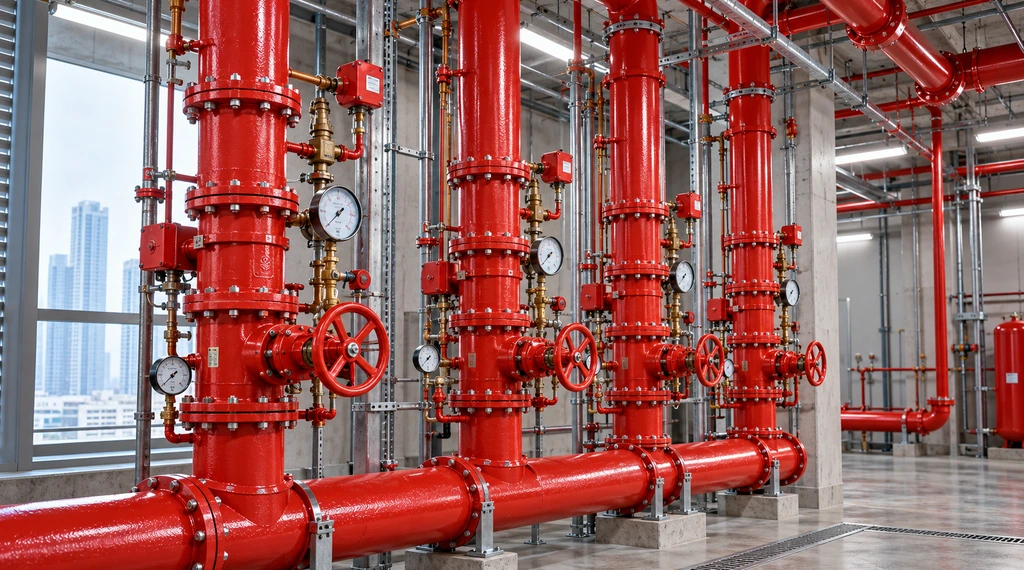
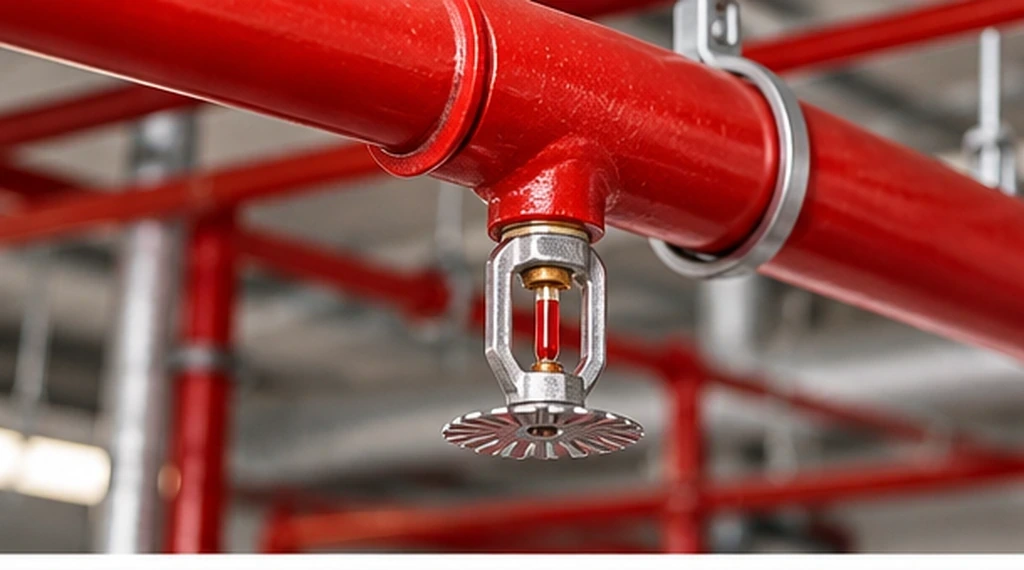
ASTM A795, ASTM A53 and ASTM A135 can all apply to steel pipe used in fire sprinkler systems, but they cover different products. A795 is written specifically for fire protection pipe, A53 covers broader mechanical and pressure applications, and A135 covers electric resistance welded pipe. UL Listing and FM Approval are separate product certifications whose coverage must match the proposed supply.
This article compares these fire sprinkler pipe standards and explains how to check certification, installation suitability and documentation against project requirements.
How Do ASTM Standards and UL/FM Requirements Fit Together?
ASTM specifications define product requirements, including applicable material, manufacturing, dimensional, testing and marking provisions. UL Listing and FM Approval identify certified products and their conditions of use. A mill test report and a product certification record therefore serve different purposes.
When reviewing fire sprinkler pipes, check both against the project specification and adopted installation rules. Confirm additional requirements from the insurer and authority having jurisdiction (AHJ), where applicable.
Do not assume that every project requires both UL and FM, or that either mark guarantees acceptance of the complete installation. If the project requires a particular ASTM specification and both certifications, evidence for only one of those requirements is incomplete.
How Do ASTM A795, A53 and A135 Compare?
The three specifications overlap in application, but their designations are not interchangeable descriptions of the same product.
| Standard | Product scope | Manufacturing route | Key check for sprinkler use |
| ASTM A795/A795M | Steel pipe for fire protection | Welded and seamless | Includes light-weight and standard-weight pipe with different joining provisions |
| ASTM A53/A53M | Steel pipe for mechanical and pressure applications | Welded and seamless | Broader application scope; sprinkler use still needs project verification |
| ASTM A135/A135M | ERW steel pipe for conveying gas, vapour, water and other liquids | Electric resistance welded | Relevant to sprinkler supply when dimensions and project requirements align |
The comparison uses A795/A795M-21, A53/A53M-24 and A135/A135M-21. Specify the edition required by the contract; a different publication date is not permission to change the agreed specification.
ASTM A795 Covers Pipe for Fire Protection
ASTM A795 covers black and hot-dip galvanized pipe for fire protection. Its scope includes NPS 1/2 through NPS 10, or DN 15 through DN 250. It distinguishes light-weight from standard-weight pipe and relates joining methods to those dimensions.
For ASTM A795 sprinkler pipe, confirm the manufacturing type, grade, size, wall thickness and finish on the offered item. A catalogue range does not establish that every combination meets the specification or has the required certification.
ASTM A53 Covers Mechanical and Pressure Applications
ASTM A53 covers black and hot-dip galvanized pipe for mechanical and pressure applications, including ordinary water, gas, steam and air lines. Its types include furnace-butt-welded, electric-resistance-welded and seamless pipe.
An A53 offer is not automatically unsuitable for sprinkler work. If it is proposed in place of specified A795 pipe, compare the permitted product standard, manufacturing type, grade, dimensions and required certifications. Matching nominal size or offering a higher-strength grade does not establish equivalence. Identify any deviation and obtain the required technical acceptance before production.
ASTM A135 Covers Electric Resistance Welded Pipe
ASTM A135 covers two grades of electric resistance welded pipe. It includes material, manufacturing and testing requirements for pipe conveying gas, vapour, water or other liquids.
If ASTM A135 ERW fire sprinkler pipe is offered, establish its actual wall dimensions and end preparation. “A135” alone does not mean Schedule 10, nor does it confirm a particular working pressure or certification scope.

What Should Be Verified in UL and FM Records?
A quotation for “UL FM fire sprinkler pipe” should identify two separate certifications. UL Listing does not establish FM Approval, and FM Approval does not establish UL Listing. Check the evidence against each requested item.
Verify the Product Covered by UL Listing
UL 852 addresses metallic sprinkler pipe for fire protection service. Its scope categorizes pipe by size, pressure rating, end configuration and wall-thickness designation. A company name and UL logo alone cannot confirm those details.
Request the certification reference and locate the product in UL Product iQ. Compare the offered designation with the recorded size, wall and end configuration. Read any conditions attached to the listing and the relevant installation instructions.
For example, evidence for one wall-thickness series should not be extended to another simply because both come from the same manufacturer. Resolve the uncovered item explicitly.
Verify the Product Covered by FM Approval
FM Approval for steel sprinkler pipe is associated with Class 1630. Use the FM Approval Guide to check current product information and reconcile it with the supplied certificate, product designation and manufacturing location.
Where both UL and FM are required, check both records against each requested item. Their covered configurations may differ. An approved product family does not establish approval of every item in the supplier’s catalogue.
How Do Dimensions, Connections and Finish Affect Suitability?
A correctly identified ASTM pipe can still be the wrong offer if its connections, pressure capability or finish do not match the approved design. Review these together while the quotation can still be clarified.
Match Wall Thickness to the Connection Method
ASTM A795 permits rolled grooves, welding and suitable plain-end fittings for its light-weight pipe. Its standard-weight provisions also include threading and cut grooving. That distinction matters when a lower-weight alternative is proposed for a design with threaded connections.
Do not approve the substitution on price and nominal diameter alone. Compare actual wall thickness, permitted end preparation and the connection manufacturer’s requirements. A change that requires different fittings or fabrication should be identified before material is supplied.
For grooved assemblies, check the selected fire pipe fittings and couplings against pipe outside diameter, wall range, groove dimensions and gasket requirements. Matching the nominal size printed on two products does not establish a compatible assembly.
Match Pressure Ratings to the Offered Configuration
Use the design pressure for the relevant part of the system and verify the pipe and joint ratings under the intended service conditions. A catalogue’s highest advertised pressure should not be applied across all sizes, wall thicknesses and end configurations.
For example, a quotation may state 300 psi while the supplied certification evidence supports only 175 psi for the proposed configuration. The buyer should request evidence for the required rating or a compliant alternative. An unrelated higher hydrostatic test pressure does not resolve that discrepancy.
Pressure capability also needs to be checked after a proposed change in coupling, fitting or end preparation. Pipe approval alone does not determine the rating of every assembled joint.
Match the Finish to the Service Conditions
Record whether the offer is black, hot-dip galvanized, externally painted or coated internally and externally. “Red pipe” describes appearance without identifying the coating material, coverage or thickness.
Compare the offered finish with the corrosion-protection requirements for the system and environment. Where certification or installation instructions limit coatings, verify the proposed treatment against those conditions. Additional coating or processing should not be assumed to preserve certification automatically.
If a supplier changes the finish to improve availability, request a revised technical description and any affected certification evidence. Resolve the change before accepting the revised supply.
What Documents Should Match the Delivered Pipe?
Prepare the document requirements during quotation, then verify them against the actual production lot before shipment. A sample certificate can show the intended format, but it does not identify the material being delivered.
| Document or record | What to match | Action if information is missing |
| Technical offer | Standard, grade, dimensions, finish and ends | Request an itemized revision |
| UL/FM evidence | Required certification and exact product configuration | Obtain the applicable record and resolve exclusions |
| Mill test report | Pipe or heat identity and specified material/test results | Request a traceable report for the supplied lot |
| Marking and packing records | Manufacturer, pipe identification and bundle references | Reconcile the physical supply with its documents |
| Inspection records | Dimensions, end preparation and specified finish checks | Complete missing checks before release |
| Approved deviation or substitution | Changes in standard, grade, dimensions, connections and certification | Obtain required technical approval before production |
If the seller is a trading company, its name may legitimately differ from the manufacturer shown on certification records. The important requirement is a documented connection between the seller, certified manufacturer and supplied pipe. An unexplained mismatch should be resolved rather than dismissed as a paperwork detail.
At receipt, compare markings and bundle identities with the accepted documents. Segregate items that cannot be identified until their traceability is restored. A successful document review does not justify installing a different product.
For more detail on choosing connections that suit the specified pipe and installation, see the fire sprinkler pipe connection types.

Frequently Asked Questions
Can One Pipe Meet Both ASTM A135 and ASTM A795?
Yes, where it satisfies both specifications. Request documentation identifying both designations and the applicable type, grade and dimensions. Dual certification does not make the specifications interchangeable or extend UL/FM coverage to configurations outside the relevant records.
Does the Mill Hydrostatic Test Pressure Establish Working Pressure?
No. A manufacturing pressure test verifies the pipe under specified test conditions. It does not establish the continuous service rating of the installed pipe-and-joint assembly. Check the applicable design requirements, product ratings and certification limitations separately.
Can the Same Certificate Be Used When Production Moves to Another Factory?
Do not assume so. Ask for evidence that the supplying manufacturing location is covered by the relevant certification arrangements. Resolve this before production or shipment; a shared brand name alone does not demonstrate that the new factory’s product has the required coverage.
Can Unused Pipe From an Earlier Project Be Used Again?
Assess it against the new project’s requirements. Confirm traceability, standard and grade, dimensions, finish, required certification and storage condition. Inspect corrosion, coating damage and pipe ends. If identity or compliance cannot be established, keep the stock out of installation until the discrepancy is resolved.
Clarify Your Fire Pipe Requirements During Quotation
You may already have a pipe schedule but still need to know whether the offered standards, certifications and end preparations match it. Baolai Steel can review your requirements alongside available fire pipe options and help identify details that need clarification.
If your specification or material list leaves these points open, send us your fire pipe requirements for review. During the quotation stage, you can clarify the proposed supply and supporting documents, making it easier to compare offers and prepare the material submission for your project’s approval process.