White or grey powder on newly delivered galvanized steel pipe often causes an immediate rejection request. The appearance can be alarming, but it does not always mean that the zinc coating has failed or that the underlying steel is corroding. In many deliveries, the deposit is wet storage stain formed after rain, condensation, or trapped moisture remained against fresh zinc in a bundle with too little airflow.
The correct response is neither to ignore every white deposit nor to clean it aggressively before inspection. The buyer should identify the deposit, separate light surface staining from serious zinc loss, document the affected locations, stop the moisture source, and decide treatment against the purchase specification. This guide explains why the condition forms, how to inspect galvanized pipe white rust, when cleaning is appropriate, and how transport and galvanized steel storage can prevent recurrence.
Confirm Whether the Deposit Is Wet Storage Stain
“White rust” is widely used as a site term, but galvanizing specialists distinguish ordinary wet storage stain from true white rust associated with some continuously wet services such as cooling towers. Wet storage stain is a white or grey zinc corrosion product found on newly galvanized surfaces after moisture is trapped with restricted air movement. On pipe, it often appears where pieces touch, beneath straps or wrapping, at the bottom of a bundle, or along drainage paths.
Start with location and texture. A light chalky film or powder concentrated at contact points after shipment in humid conditions strongly suggests wet storage stain. Red-brown corrosion, deep pits, exposed dark steel, peeling zinc, weld-related defects, chemical residues, or a deposit that remains wet in service may indicate another problem. Dirt, salts, flux residue, cement, and alkaline contamination can also change appearance, so colour alone is not a diagnosis.
Record the bundle number, heat or batch identification, pipe size, galvanizing route, delivery date, packaging condition, weather exposure, and photographs before moving or cleaning the pipe. Open representative bundles and check hidden contact areas, not only the top pieces. The existing galvanized steel pipe inspection checklist provides a useful framework for checking coating continuity, dimensions, marking, and documentation around the affected areas without turning an appearance issue into an isolated visual judgement.
Understand Why White Deposits Form on Fresh Zinc
Freshly galvanized zinc is reactive. Under normal atmospheric exposure with adequate air, it develops a stable protective patina through a sequence of reactions involving oxygen, moisture, and carbon dioxide. That patina supports the long service life expected from galvanizing. Problems arise when water remains between closely packed surfaces and limits access to freely circulating air and carbon dioxide. Instead of forming the stable patina normally, the surface can accumulate porous zinc oxide and zinc hydroxide products seen as white or grey powder.
Several events can create that microenvironment. Pipe may be bundled while damp, exposed to rain at a port or job site, carried through large temperature changes that create condensation inside wrapping, stored directly on wet ground, or covered so tightly that moisture cannot escape. Nesting, close contact, non-draining bundle geometry, wet timber, and wide straps can hold water against the zinc. Newly galvanized pipe is particularly vulnerable because its protective patina has not fully developed.
The galvanizing process itself should not automatically be blamed. Wet storage stain develops after galvanizing when the coating reacts with an unfavourable storage or transport environment. The parties should still verify whether the ordered coating, passivation, packing, and handling instructions were met. A dispute may involve both product conformance and custody conditions, so conclusions should follow evidence.
Grade the Severity Before Deciding Acceptance
The quantity of white powder can look greater than the amount of zinc consumed because the corrosion products are bulky. Light or medium staining is often superficial and may weather away after the material is separated, dried, and exposed to normal air. Heavy, persistent staining can consume more zinc, leave dark areas, or reveal localized coating loss. Acceptance therefore depends on the remaining protective coating and the project requirements, not on a photograph alone.
Inspect progressively. First, dry and gently brush a small representative area with a clean nylon-bristle brush. If a coherent zinc surface remains and there is no red rust or pitting, the condition may be mainly cosmetic. If the deposit is thick, crusted, repeatedly damp, widespread inside bundles, or associated with dark etched areas, expand the inspection. Measure coating thickness at affected and unaffected locations using an appropriate calibrated method and the sampling rules of the governing specification. Check adhesion or continuity only when the applicable standard or approved procedure calls for it; improvised scraping can create damage that was not present originally.
The decision should classify material by location and severity rather than averaging an entire shipment. Pipe with light stain may be accepted after drying or cleaning, while heavily affected bundles remain on hold for further assessment. Areas with exposed base steel, significant zinc loss, or red corrosion may require an approved repair, regalvanizing, replacement, or engineering disposition. If appearance is critical for exposed architectural work, even technically acceptable staining may need agreed cleaning or appearance criteria.
Clean Affected Pipe Without Damaging the Zinc Coating
The first corrective action is environmental: separate the pipe, improve airflow, drain standing water, and allow all surfaces to dry. Continuing to clean pipe while it remains wet and tightly bundled does not stop the reaction. Once dry, light loose deposits can often be removed with a clean stiff nylon brush. Avoid wire brushes, uncontrolled abrasive blasting, or aggressive grinding because they can remove sound zinc and make coating assessment less reliable.
For deposits that do not respond to dry brushing, use only a cleaning method approved by the galvanizer, coating specialist, and project specification. Proprietary cleaners or mild chemical treatments may be suitable in some cases, but concentration, contact time, rinsing, wastewater control, and final drying all matter. Strong acids and alkaline cleaners can attack zinc or leave residues. A treatment that improves colour while thinning the coating is not a successful repair.
After cleaning, inspect the surface again and remeasure coating thickness where severity justified it. Any bare area should be assessed against the relevant galvanizing and repair specification. Approved zinc-rich paint, zinc thermal spray, or another repair method may be permitted within defined damage limits; the repair product, surface preparation, thickness, and inspection must be documented. Do not apply ordinary paint simply to hide a white patch, because it can conceal remaining moisture or contamination and create an untraceable mixed coating system.
Prevent White Rust During Packing, Shipping, and Storage
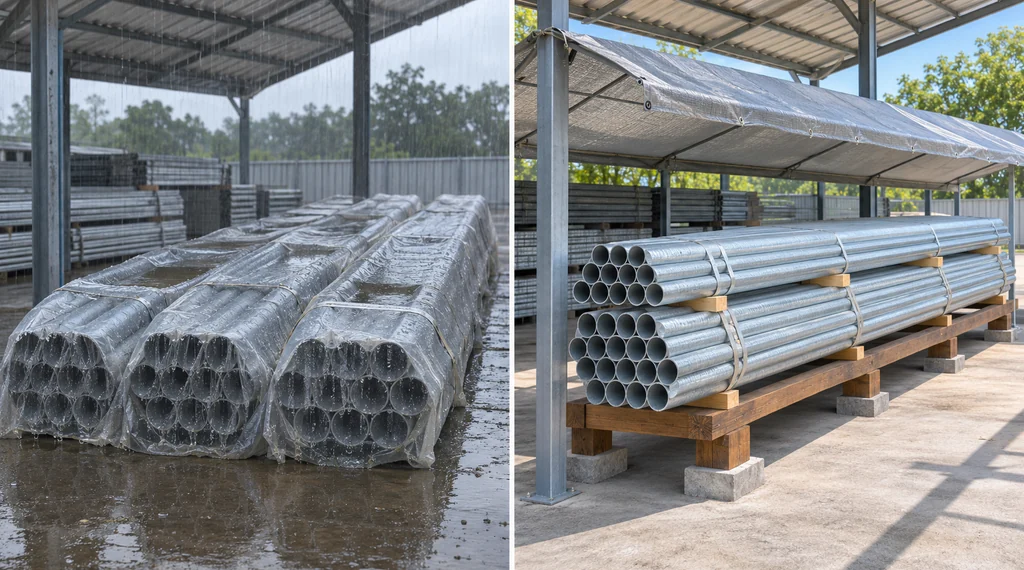
Prevention depends on keeping water from remaining on fresh zinc and allowing air to reach the surfaces. Pipe should be dry before bundling, and the packing design should consider condensation during the complete route from mill to final installation. Waterproof wrapping can keep rain out, but if it traps initial moisture or temperature-driven condensation, it creates the condition it was intended to prevent. Ventilation, drainage, separation, and inspection points therefore matter as much as the cover material.
During transport, use dry spacers or separators where the packing plan allows, protect pipe from direct water entry, and avoid arrangements that form sealed water pockets. Keep end protection and wrapping secure without blocking drainage. At transfer ports and temporary yards, do not leave uncovered bundles where rain, mist, or dew can enter. If the route crosses climates or includes long sea transit, agree the need for ventilated packaging, desiccants, moisture indicators, or passivation with the manufacturer; none of these measures replaces dry loading and sound bundle design.
At the receiving yard, place bundles under cover in a dry, well-ventilated area. Raise them on stable supports above soil, vegetation, and standing water. Arrange supports so the pipe is secure and the bundle slopes enough to drain without creating rolling or structural hazards. Separate tiers to permit airflow, keep covers clear of the zinc surface, and open temporary wrapping when condensation is found. After rain or major temperature changes, inspect contact points and lower layers rather than assuming the visible top surface represents the whole bundle.
Assign responsibility and timing. Receiving personnel should photograph packaging before unloading, record wet bundles immediately, isolate affected material, and notify the responsible parties before cleaning. Warehouse staff need a routine for cover integrity, drainage, humidity, and stock rotation. Installers should avoid leaving opened bundles exposed. These simple controls make the condition traceable and prevent a manageable storage issue from becoming a shipment-wide coating dispute.
Specify Galvanized Pipe and Packaging as One Requirement
The purchase order should distinguish hot-dip galvanized finished pipe from pipe made from pre-galvanized strip, because the coating route, continuity at the weld, and available coating requirements can differ. Define the pipe product standard, galvanizing standard, coating mass or thickness where applicable, passivation or post-treatment condition, appearance criteria, marking, inspection document, repair limits, packaging, and storage instructions. The destination climate and expected storage duration should influence the packing plan.
Buyers can compare the galvanized steel pipe and broader coating pipe ranges once those requirements are known. A BS 1387 galvanized ERW steel tube or hot-dipped galvanized pipe page identifies a possible supply route, but the buyer still needs to confirm the applicable current standard, dimensions, coating method, intended service, and required documents. A product name alone does not define wet-storage protection.
Include a receiving plan in the order or inspection and test plan. It should state when bundles are opened, how many pieces are sampled, what happens if moisture is found, who may authorize cleaning, which coating measurements are required, and how nonconforming bundles are segregated. This turns white-rust prevention from general advice into an auditable delivery requirement.
Get a Galvanized Pipe Proposal That Protects Delivery Condition
Baolai can review the pipe standard, dimensions, galvanizing route, coating requirement, passivation, end processing, packaging, shipping conditions, and inspection documents against an enquiry. Buyers receive a more useful proposal when they provide the destination, application, exposure, expected storage period, bundle limits, coating acceptance criteria, required inspection document, and any third-party inspection points.
These inputs help align the product and its delivery protection before shipment, reducing the chance that acceptable pipe arrives with avoidable moisture staining or that harmless surface deposits trigger an unnecessary rejection. To compare the available galvanized steel pipe against a defined storage and receiving plan, submit the coating and logistics requirements together rather than treating packaging as a late commercial detail.
Frequently Asked Questions
Does white rust mean the galvanized pipe must be rejected?
No. Light wet storage stain is often superficial, and acceptance should consider the remaining coating, severity, project specification, and service appearance. Heavy deposits, exposed steel, red rust, or significant zinc loss require further assessment and may justify repair or rejection.
Can white rust spread after the pipe is installed?
The reaction continues while moisture remains trapped with inadequate airflow. Once the pipe is dry and exposed to normal wet-dry cycles, light wet storage stain often stabilizes or weathers. Continuously wet service or concealed contact areas need separate corrosion review.
Does passivation eliminate the need for dry storage?
No. Passivation can reduce early reactivity, but it is not a substitute for dry loading, ventilation, drainage, and prompt receiving inspection. The passivation type must also be compatible with later painting, welding, service, and project requirements.
Should galvanized pipe be stored in completely sealed plastic wrapping?
Only if the packaging system controls initial moisture and condensation throughout the route. An airtight cover around damp pipe can worsen staining. In many logistics conditions, weather protection combined with drainage and controlled ventilation is safer than an improvised sealed wrap.
Sources
American Galvanizers Association: Wet Storage Stain
American Galvanizers Association: Proper Storage and Handling