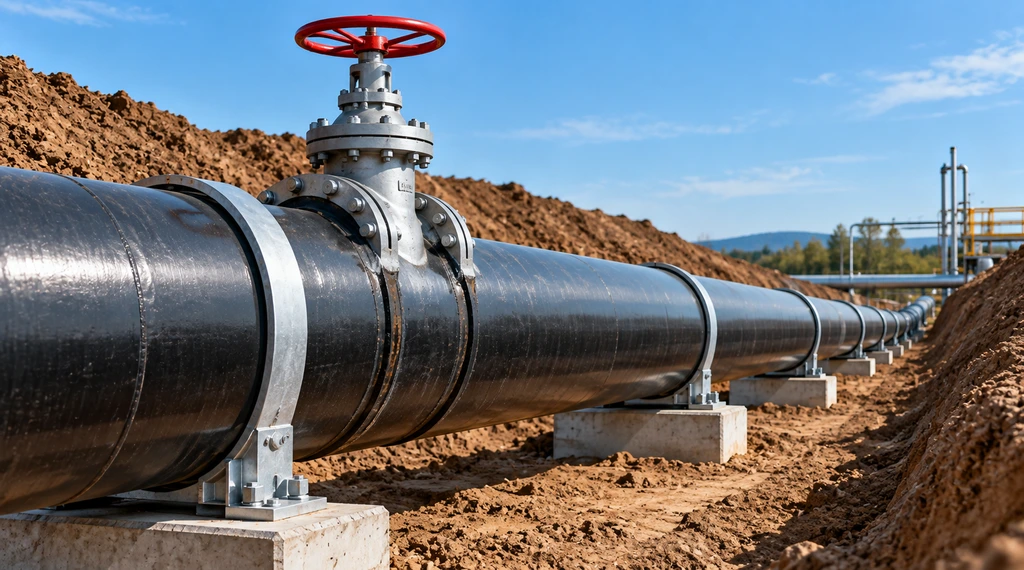
Steel pipe surface preparation starts with confirming the coating requirements, removing contaminants and treating surface defects. For bare steel requiring abrasive blasting, the next steps are blasting, checking cleanliness and surface profile, testing residual contamination, and protecting the prepared surface until coating.
A surface that looks clean may still carry salts or have an unsuitable profile. Acceptance therefore depends on separate checks against the coating specification, applicable standards and the manufacturer’s Product Data Sheet (PDS). This article explains the preparation sequence, the checks needed after blasting, and how to preserve an accepted surface until coating, while distinguishing hot-dip galvanizing from the bare-steel blasting route.
What Requirements Should Be Confirmed Before Surface Preparation?
Confirm the Substrate and Pipe Condition
Identify the steel grade, manufacturing route, dimensions and starting surface. Bare pipe, previously coated pipe, galvanized pipe and repair areas require different treatment. Check for mill scale, rust, temporary preservatives and transport contamination. Identify welds, pipe ends and areas requiring masking or special preparation.
Confirm the Coating System
For fusion-bonded epoxy (FBE) and three-layer polyethylene or polypropylene (3LPE/3LPP), preparation must suit the material bonding directly to steel. Two-layer polyethylene or polypropylene (2LPE/2LPP) systems require confirmation of their actual bonding materials; their requirements cannot simply be copied from three-layer systems.
Liquid epoxy and other paints need preparation matched to the product and service. These distinctions matter when specifying external coated steel pipes.
Hot-dip galvanizing commonly uses degreasing, acid pickling and fluxing before immersion in molten zinc. Mechanical cleaning may also be needed for residues that chemical cleaning cannot remove. The bare-steel blasting checklist below is therefore not a universal galvanizing checklist. Painting over existing zinc requires another approach.
Define Acceptance Criteria in the Technical Documents
The specification and Inspection and Test Plan (ITP) should identify cleanliness grades, profile ranges, dust and salt limits, environmental restrictions, test methods, inspection frequency, permitted holding time and rework procedures. Confirm standard editions and resolve conflicting requirements before production. Identify any hold point requiring release before coating proceeds.
Why Is Pre-Cleaning Necessary Before Blasting?
Remove Oil, Grease and Organic Contamination
Blasting cannot reliably remove oil, machining fluids or temporary rust preventives. It can spread contamination across the steel and into reusable abrasive. Remove these materials first using a suitable cleaning procedure, then check the result. Repeated wiping with a dirty cloth or contaminated solvent can redistribute the residue rather than remove it.
Remove Salts, Dirt and Transport Contamination
Pipe exposed to sea freight, coastal storage or dirty handling needs particular attention. Soluble salts can remain after the visible dirt disappears. Solvent degreasing is not a reliable substitute for salt removal; suitable water-based cleaning may be required. Allow the pipe to dry, check for remaining contamination and keep it away from dirty supports or handling equipment.

How Should Welds, Edges and Steel Defects Be Treated Before Blasting?
For welded steel pipes, assess the seam and adjacent surface as well as the pipe body. Remove any weld slag, spatter, burrs and sharp projections that could interrupt coating coverage. Inspect undercut, pits, surface laps and exposed laminations rather than grinding every irregularity indiscriminately.
Grinding must not reduce the pipe below its permitted wall thickness or replace weld acceptance checks. Defects requiring repair should follow an approved procedure, with the necessary inspection afterward.
Check pipe ends separately, including the specified cutback—the length left without the main coating for joining or subsequent treatment. Blasting can reveal previously hidden defects; return those areas for assessment, treatment and reinspection before coating.
How Is Steel Pipe Abrasive Blasted?
Select Suitable Abrasive
Choose abrasive material and particle distribution capable of producing both the specified cleanliness and profile. Check moisture, contamination and the condition of recycled material. A changing abrasive mix can change the finished profile even when equipment settings remain unchanged.
Check Blasting Equipment and Compressed Air
Inspect nozzles, hoses, separators and dust extraction, or the corresponding components on a mechanical wheel-blasting line. Where compressed air is used for blasting or blowdown, check for oil and water using the specified method; ASTM D4285 addresses this check. Correct contamination at its source before continuing.
Produce a Continuous, Uniform Blasted Surface
Confirm dry steel and acceptable environmental conditions before starting. Control coverage around the circumference and beside welds, observing pipe-end masking requirements. Avoid missed areas and excessive treatment that produces an unsuitable profile. Keep bare hands and dirty supports off prepared steel.
How Is the Surface Accepted After Blasting?
Blasting produces the prepared surface; inspection establishes whether it is ready for coating. Check visual cleanliness, profile and residual contamination separately. These are acceptance checks on the completed work, with additional cleaning or blasting required when a result falls outside the specified limits.
Verify the Visual Cleanliness Grade
ISO 8501-1 defines visual preparation grades, including Sa grades. Projects may instead specify SSPC/NACE blast-cleaning standards. Sa 2½ and SSPC-SP 10/NACE No. 2 near-white metal cleaning are common references, but they should not be treated as automatically interchangeable.
Use the specified written criteria and applicable visual references. Judge remaining rust, scale, previous coating and visible contamination, rather than expecting one uniform steel colour. A visual pass does not establish an acceptable salt level or profile.
| Inspection area | What to check | Insufficient evidence |
| Pipe body | Rust, scale and coating residues | Surface colour alone |
| Weld areas | Spatter, projections and missed blasting | Adjacent pipe condition |
| Pipe ends | Cleanliness and specified cutback | An overall pipe pass |
Measure the Surface Profile
Surface profile, sometimes called anchor profile, describes the peaks and valleys created by preparation. Cleanliness describes the removal of unwanted material. A pipe can pass one requirement and fail the other.
An insufficient profile may weaken mechanical anchorage; an excessive profile can leave peaks inadequately covered. For FBE coated steel pipe, match the profile to the epoxy material and specified film thickness. In multilayer systems, use the requirements of the layer contacting the steel; total system thickness is not a substitute for the primer’s requirements.
Methods include replica tape, profile comparators, depth micrometers and stylus instruments. ASTM D4417 covers field profile measurement techniques and notes that curvature can affect depth-micrometer results.
Confirm suitability for the pipe diameter. Record locations, units, instrument identification and results. Do not interchange methods or substitute an average roughness parameter for a specified peak-to-valley measurement without an approved basis.
Check Surface Dust
Where specified, use the ISO 8502-3 tape method and report both dust quantity and particle-size ratings. Include weld surroundings and areas where dust collects. Remove unacceptable dust, then repeat the check.
Check Soluble Salts
ISO 8502-6 addresses extraction, while ISO 8502-9 uses conductivity to assess water-soluble salts. This does not separately identify chloride. Compare results, with the correct units, against the specified limit. If excessive, clean, dry and retest; restore any cleanliness or profile requirements affected by rework.
Check Moisture, Flash Rust and Recontamination
Inspect for condensation, fresh rust, fingerprints, rain exposure and contaminated blowdown. A previous inspection pass does not authorize coating over a newly contaminated surface.
How Is the Prepared Surface Protected Until Coating?
An accepted surface can deteriorate while waiting or moving between stations. Environmental monitoring and holding-time controls preserve the condition already achieved.
Monitor Conditions and Prevent Condensation
Record air temperature, steel temperature, relative humidity, dew point and the steel-to-dew-point temperature difference. Air temperature alone does not establish whether the pipe risks condensation. Take readings at the required intervals and reassess when conditions change.
Apply the specified limits during the relevant preparation and waiting stages. If condensation threatens compliance, suspend the affected operation and restore acceptable conditions. This check does not replace the separate process-heating requirements for FBE application.
Control Holding Time and Recheck the Surface
The permitted interval depends on the procedure, humidity, contamination exposure and factory controls. “Coat the same day” is not an adequate release rule.
If time expires or the surface changes, inspect again. Clean, dry or reblast as necessary, then repeat affected checks. Remaining within the time limit never overrides visible deterioration.
What Pre-Coating Surface Preparation Checklist Should Buyers and Inspectors Use?
Use this checklist for the bare-steel blasting route described above. Apply the project’s acceptance criteria to each item; galvanizing needs its own preparation plan.
| Stage | Inspection item | Required evidence | Corrective action |
| Technical review | System, standards and limits | Approved specification/ITP | Clarify before work |
| Pre-cleaning | Oil, salts and dirt | Cleaning and test records | Clean and retest |
| Defect treatment | Welds, edges and ends | Inspection/repair records | Approved repair and reinspection |
| Blasting | Abrasive, equipment and coverage | Batch/equipment checks | Isolate and assess affected pipe |
| Visual cleanliness | Specified surface condition | Grade and inspected locations | Reprepare and reinspect |
| Profile | Specified parameter and range | Readings and instrument ID | Adjust, rework and remeasure |
| Residual contamination | Dust, salts and moisture | Ratings, readings and units | Clean, dry or reprepare |
| Coating release | Surface, environment and timing | Required ITP release | Hold until requirements are met |
Retain the approved procedure, equipment and abrasive checks, inspection results, environmental readings, instrument calibration status, and rework records. Link them to pipe identification or a traceable batch, with inspection times and responsible personnel. Record actual values or grades rather than only “Pass.”
Once the surface has been accepted, inspection continues through coating application, testing and repair. For those later stages, see the 3LPE and FBE coating inspection checklist.

Frequently Asked Questions
Does Every Steel Pipe Coating Require Abrasive Blasting?
No. Preparation depends on the substrate, product and service requirements. Hot-dip galvanizing commonly follows chemical cleaning and fluxing, while some paint systems permit other preparation methods. An alternative is acceptable only when the applicable specification and product requirements allow it.
Can Galvanized Pipe Be Blasted Before Painting?
Yes, controlled sweep blasting may be appropriate when hot-dip galvanized pipe will receive paint, but the process must preserve the zinc coating. Assess weathering, zinc corrosion products and any surface treatments first. Use parameters approved for the zinc surface and selected paint; do not copy the bare-steel blasting procedure.
Can Power Tool Cleaning Replace Abrasive Blasting?
Only where permitted. Removing loose rust with a wire brush does not establish the same condition as specified abrasive blasting. Confirm the required cleanliness and profile, the permitted tool-cleaning standard, and the coating manufacturer’s acceptance before making a substitution.
Is Holiday Testing Part of Pre-Coating Surface Inspection?
No. Holiday testing detects discontinuities in an applied coating using a suitable method. It cannot verify the cleanliness, salt contamination or profile of the steel before coating. Those checks must be completed and documented at the appropriate preparation stages.
Get Your Coated Pipe Requirements Ready for Production
You may already know the pipe size and coating type your project needs, yet still be unsure whether the specification covers surface preparation properly. Baolai Steel can review your existing requirements and help identify missing details, such as the required surface condition, inspection methods and records to accompany delivery.
If those details are incomplete, send us your coating specification for review. You can clarify what preparation and inspection are included during the quotation stage, reducing the risk of unexpected rework or missing acceptance documents.