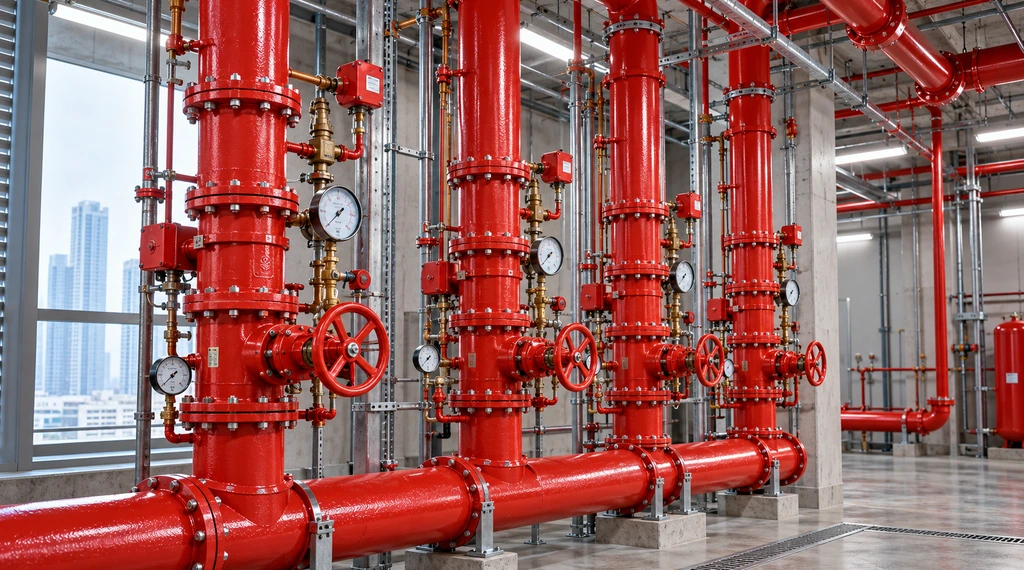
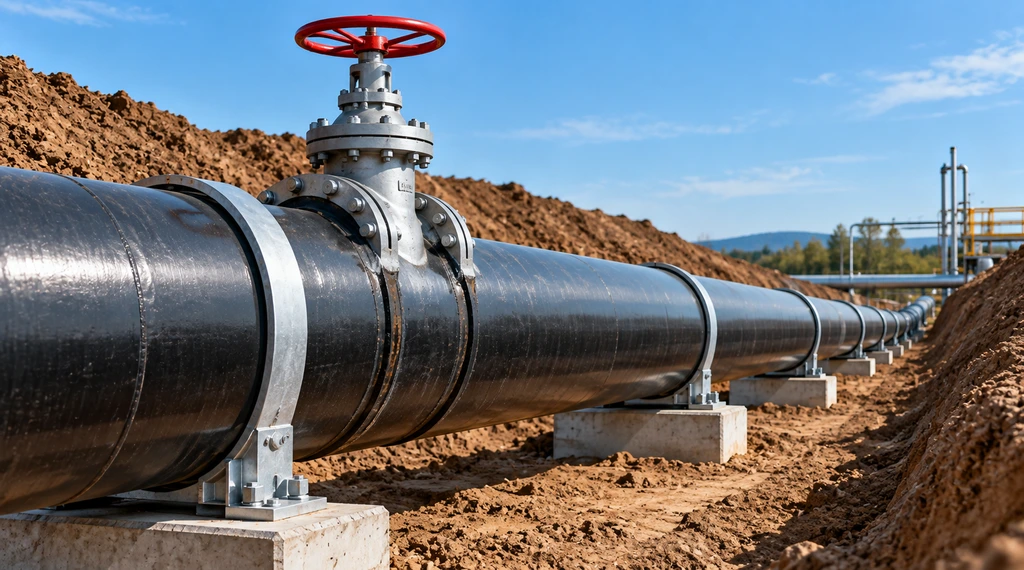
Steel pipe piles transfer foundation loads through weak ground to a supporting soil or rock layer. Depending on the approved design, the steel cylinder may remain hollow, receive concrete, or act as a permanent casing for a cast-in-place pile.
Selecting a steel pipe pile is not simply a choice between three ASTM A252 grades. Geotechnical conditions establish how the pile interacts with the ground, structural design establishes the required resistance and connection, and the installation plan establishes what the pipe must withstand before reaching its final position. The purchase specification translates those decisions into grade, dimensions, length, end condition, manufacturing restrictions, corrosion protection, inspection, and documentation requirements. This sequence helps buyers avoid an unsuitable grade, overlooked installation loads, or missing approval documents.
Start with the Foundation Conditions and Pile Configuration
The first question is not which pipe-making process to use. It is what the pile must do in the approved foundation design. The answer comes from the geotechnical report, foundation drawings, load information, installation method, and exposure assessment.
An open-ended pile allows soil to enter during installation. Its behavior may be influenced by soil plugging, penetration depth, soil type, and the analysis method used by the designer. A closed-ended pile uses a plate, shoe, or fabricated end to prevent soil from entering. That end condition changes penetration resistance, driving behavior, and the forces imposed on the pipe. The end should therefore be defined before the pipe and any end components are ordered.
A concrete-filled pile uses the steel pipe together with concrete and, where specified, reinforcement. Concrete filling may support the required structural behavior, connection detail, durability strategy, or construction sequence, but it does not automatically justify a thinner wall or lower steel grade. Any such change requires design verification.
Applications enter the decision here because they change the design inputs. Marine foundations may add splash-zone corrosion and wave or vessel actions. Bridge piles may face combined loads, variable soils, and strict splice controls. Industrial foundations may involve concentrated loads, pile-group effects, or vibration limits. Retaining works and cofferdams may add extraction, reuse, or temporary-work requirements. These applications do not select the pile; they reveal conditions that must become design and purchasing requirements.
Once the pile function and configuration are approved, the buyer can evaluate whether ASTM A252 is the correct product specification and which requirements must be added by the project.

What ASTM A252 Covers—and What It Leaves to the Project
ASTM A252/A252M-26 is the current active ASTM specification for welded and seamless steel pipe piles. ASTM states that it covers nominal-wall cylindrical steel pipe piles in which the steel cylinder acts as a permanent load-carrying member or as a shell for a cast-in-place concrete pile. It addresses welded and seamless products, material tensile requirements, elongation, and common size and mass information. See ASTM A252/A252M-26.
The standard does not calculate axial or lateral pile capacity, determine penetration depth, select an open or closed end, establish a corrosion allowance, choose installation equipment, or design the splice and pile-to-structure connection. Those decisions remain with the applicable design documents and responsible project professionals.
The order should cite the required edition and unit system. ASTM A252/A252M presents inch-pound and SI requirements as separate systems, and ASTM cautions against combining their values. For an international project, the contract may cite ASTM A252, a national adoption, another pile product standard, or project-specific requirements. ASTM A252 should therefore be used because the approved documents require it, not because it is assumed to be universal.
A pipe can comply with the base standard yet still fail project requirements for dimensions, corrosion protection, weld examination, traceability, end fabrication, or length. Treat ASTM A252 as the starting product specification and list additional requirements separately.
Choose the ASTM A252 Grade from the Approved Design
ASTM A252/A252M identifies Grades 1, 2, and 3, with different specified mechanical-property requirements. The correct grade is the one stated in the approved drawings, material specification, or accepted technical schedule. The grade number is not a stand-alone ranking of complete pile performance.
A higher grade is not automatically the safer or more economical purchase. Pile behavior can also depend on diameter, wall thickness, local buckling resistance, driving stress, splice and connection details, corrosion allowance, weld procedures, and dimensional availability. A proposed change from Grade 2 to Grade 3 may appear conservative when only strength is considered, but it can still affect design assumptions, welding controls, availability, and approval status.
For each grade, confirm the ASTM edition, required mechanical properties, compatibility with the approved welding plan, and availability in the required dimensions and length. Require material test documentation linked to heat and pipe identification.
Related standards should not be treated as automatic substitutes. ASTM A53, ASTM A500, API 5L, and ASTM A252 have different scopes and requirements even when products share similar dimensions or manufacturing routes. For a broader explanation, see this pipe-grade comparison. Any substitution still needs a clause-by-clause review and written project approval.
Set Dimensions and Delivery Length around Design and Installation
After the configuration and grade are fixed, diameter, nominal wall thickness, individual delivery length, and total installed length become the next linked decisions. These values should be taken from approved design documents rather than inferred from a general pipe name.
Wall thickness may be governed by final structural resistance, installation stresses, corrosion allowance, fabrication details, or a combination of these conditions. The installation stage can impose handling, lifting, driving, gripping, or local impact demands that differ from the pile’s final in-service loads. A pipe that works in the completed structural model may still require adjustment if it cannot meet the approved installation analysis.
Delivery length also affects more than transport. If the installed pile is longer than the mill or transport length, the RFQ should identify section lengths and the expected number and location of field splices. Before production, the project should define joint preparation, alignment tolerances, welding procedures, welder qualifications, inspection method, acceptance criteria, and responsibility for field records. This prevents a low-cost delivery-length decision from creating uncontrolled site welding or schedule delays.
State outside diameter and wall thickness directly. A nominal size or Schedule should not replace the design dimensions. Also define straightness, end preparation, length tolerance, applicable mass requirements, and project-specific dimensional checks.

When the Manufacturing Route Affects the Pile Order
The manufacturing route becomes useful only after configuration, grade, dimensions, length, and inspection needs are established. ASTM A252 covers welded and seamless products, but the contract may restrict routes or seam forms, and availability varies by size and length.
ERW pipe has a longitudinal electric-resistance-welded seam. LSAW pipe is formed from plate with a longitudinal submerged-arc weld. SSAW pipe is formed from coil with a helical submerged-arc weld. Seamless pipe has no welded seam. These descriptions explain how the cylinder is made; they do not identify whether the pile is open-ended, closed-ended, hollow, or concrete-filled.
No route is universally best. Ask which approved route meets the dimensions, properties, seam configuration, weld examination, straightness, end preparation, length, and quantity. If the project does not restrict the route, request compliant alternatives and check each proposal against the design and inspection requirements.
Large-diameter projects may require review of current LSAW and SSAW product families. The category does not confirm availability of a specific ASTM A252 grade, size, length, or test plan.

Match Corrosion Protection to the Exposure Strategy
Corrosion protection follows the exposure assessment. Soil chemistry, groundwater, seawater, splash-zone exposure, installation abrasion, design life, inspection access, and maintenance strategy may lead to corrosion allowance, coating, cathodic protection, concrete filling, or a coordinated combination.
If a coating is specified, the order should identify the coating system, governing standard, surface preparation, thickness and tolerance, end cutback, repair procedure, inspection method, acceptance criteria, and required records. Installation must also be considered: a coating that is suitable for the service environment may require additional mechanical protection or damage inspection after handling and driving.
After the project corrosion strategy is established, review the available external coating pipe options. The selected system and inspection plan must still come from the approved project requirements rather than from a catalog description.
Build the RFQ from the Decisions Already Approved
A complete RFQ should preserve the line from design to delivered pipe. Begin with project location, application, governing documents, geotechnical references, ASTM A252/A252M edition, unit system, grade, dimensions, quantity, individual delivery length, and total pile length.
Then state the permitted manufacturing route, seam restrictions, pile end configuration, splice arrangement, end preparation, attachments, surface condition, corrosion allowance, coating system, and concrete-filling interface where applicable. Add the project tolerances and acceptance criteria that are not fully established by the base product standard.
Finally, define evidence required before production and shipment: traceable material test certificates, dimensional and mechanical-test reports, weld and coating inspection records, third-party hold or witness points, marking, packing, and shipping documents. Separate pre-production approvals from final shipment records.
Baolai Steel’s current product range and processing capability should be checked against the complete order rather than assumed from a general product family. Buyers can review Baolai Steel and send the approved grade, dimensions, lengths, end details, coating specification, inspection plan, quantity, and destination requirements through the contact page. Providing those inputs gives the buyer a clearer compliance response and helps expose grade, weight, splice, coating, or documentation gaps before an order is placed.
Frequently Asked Questions
Does the ASTM A252 grade determine the load capacity of a pipe pile?
No. The grade supplies defined material properties, but pile capacity depends on the complete structural and geotechnical design, including dimensions, soil interaction, installation effects, connection details, and applicable safety factors. Use the grade stated in the approved design, then verify that the ordered diameter, wall thickness, length, and fabrication details match the same design basis. Do not use a higher grade as a substitute for a capacity calculation.
What should a buyer do when the required pile is longer than the available delivery length?
Plan and approve the splice system before ordering shorter sections. The project should define section lengths, joint preparation, alignment limits, welding procedure, welder qualifications, inspection method, acceptance criteria, and responsibility for site records. Add those requirements to the RFQ and compare the total installed cost and schedule impact, not only the price per delivered pipe section.
When should an RFQ restrict ERW, LSAW, SSAW, or seamless pipe?
Restrict the manufacturing route when the governing standard, approved design, weld or seam acceptance criteria, dimensional range, installation analysis, or project specification requires it. If no restriction exists, state the performance, dimensional, inspection, and documentation requirements and ask for compliant route options. Before accepting an alternative, obtain confirmation that it satisfies every relevant project clause rather than relying on a general claim that one process is better.