Galvanized steel pipe can be used for some water-supply applications, but it is not a default choice for every new potable-water system. Suitability depends on the intended service, local material rules, drinking-water contact requirements, water chemistry, coating condition, operating temperature, connected materials, and whether the project concerns a new installation or an existing system.
Online answers conflict because one source may discuss industrial water, another an old service line, and another a new public drinking-water installation. The real question is whether the specific pipe is permitted and suitable under the actual conditions. The following checks lead to a decision to use it, add controls, inspect further, or choose another material.
Define the Water Service and Installation Conditions
Begin by defining the water service. Potable water, industrial process water, irrigation, fire-water storage, and other utility services do not have identical hygiene or approval requirements. Also distinguish cold from hot water, continuous circulation from stagnation, and new installation from existing-system repair. Acceptance in one case does not establish acceptance in another.
Interior, exterior, and buried pipe also face different external corrosion conditions. Suitability for atmospheric exposure does not prove suitability for a particular soil. Before evaluating standards or coating thickness, record the water use, temperature, flow pattern, installation location, intended service life, and approving jurisdiction. Without this boundary, “water pipe” is too broad for a material decision.
Review Water Chemistry and Operating Conditions
Galvanizing places a zinc layer between the water and steel, but that protection is not equally stable in every water composition. Acidity, alkalinity, hardness, dissolved inorganic carbon, gases, disinfectants, and temperature can influence zinc dissolution, deposit formation, and later corrosion of exposed steel. “Normal water” is not an acceptance criterion.
Obtain representative water-quality data from the supplier, owner, or treatment specialist. Apply the relevant national guidance and project corrosion criteria rather than a universal pH limit copied from another market. Consider operating conditions with chemistry: temperature, flow, and stagnation can change corrosion, deposits, and contact time. The result depends on the system, not one isolated variable.
In existing systems, discoloured water, metallic taste, particles, falling pressure, or reduced flow may indicate corrosion or internal restriction, but none identifies the cause alone. Compare source and outlet samples, note stagnation, review maintenance history, and inspect representative sections. Testing is preferable to guessing whether the source is the water, galvanized pipe, another component, or recent network work.
Assess the Zinc Coating, Pipe Age, and Internal Condition
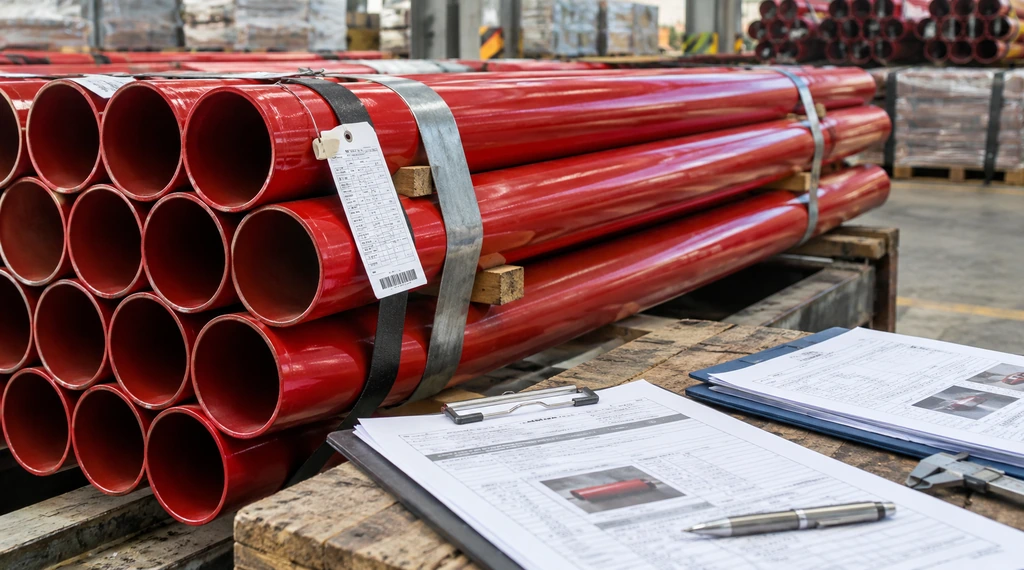
New and existing pipe require different evidence. For new material, confirm the pipe standard, galvanizing method, zinc coating, surface coverage, end finish, marking, and batch records. Hot-dip galvanizing after manufacture and forming pipe from pre-galvanized strip are different routes, so welds, cut edges, threads, and later fabrication require specific attention.
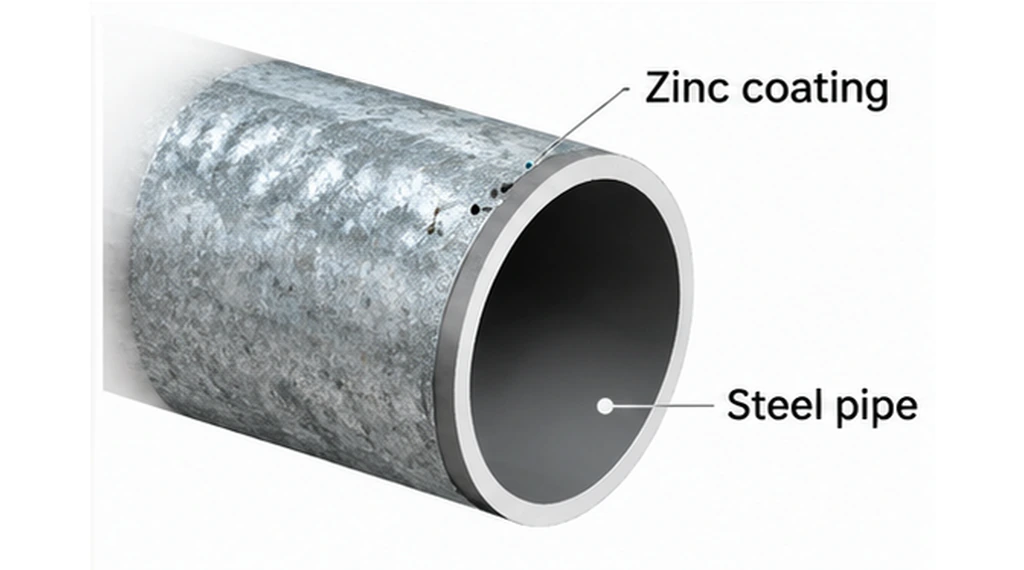
For an existing system, age prompts investigation but is not an automatic replacement limit. Water chemistry, original coating, temperature, flow, repairs, and connections can make similarly aged pipes perform differently. External appearance reveals little about internal scale or localized coating loss. Use water tests, pressure and flow observations, records, and representative internal inspection to determine condition.
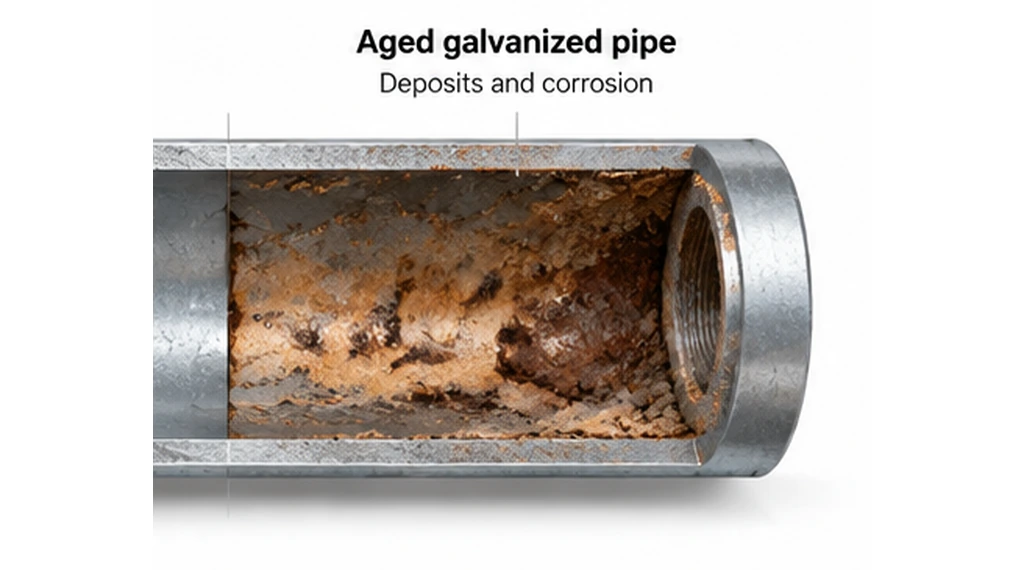
Check accessible areas for red rust, deposits, coating discontinuities, damaged threads, exposed ends, leaking joints, and incompatible repairs. Each finding needs a disposition: cosmetic variation may need no action, damaged coating may require approved repair, and significant restriction or integrity loss may justify replacement. The galvanized steel pipe inspection checklist connects observations with test records and batch documents.
Check Connected Metals and Installation Exposure
A suitable pipe can deteriorate prematurely in a poorly coordinated system. Connections to copper, brass, or other dissimilar metals can promote galvanic corrosion. Risk depends on the metals, relative surface areas, water chemistry, temperature, flow direction, and joint arrangement. An insulating fitting is not a universal remedy without reviewing the full path.
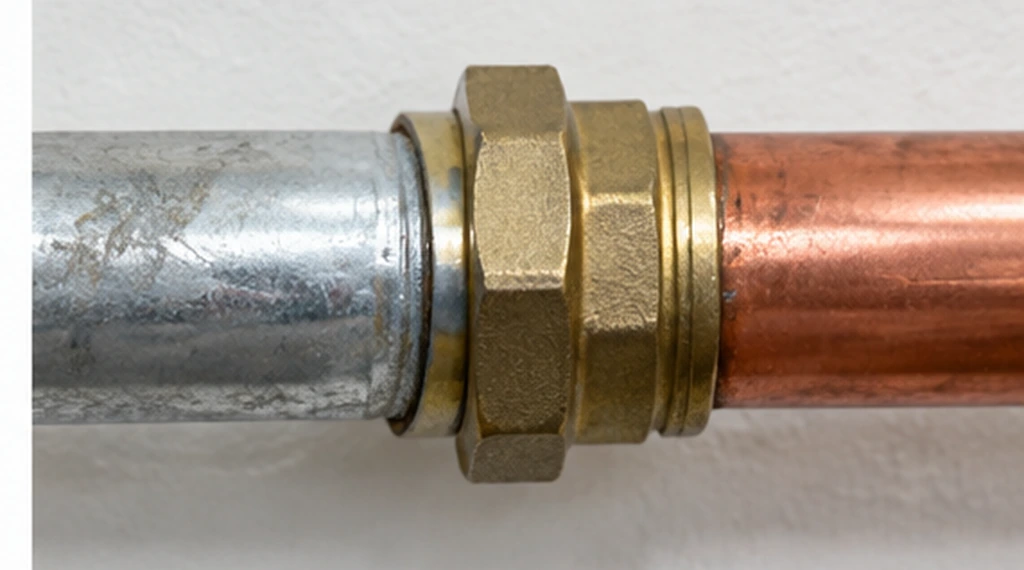
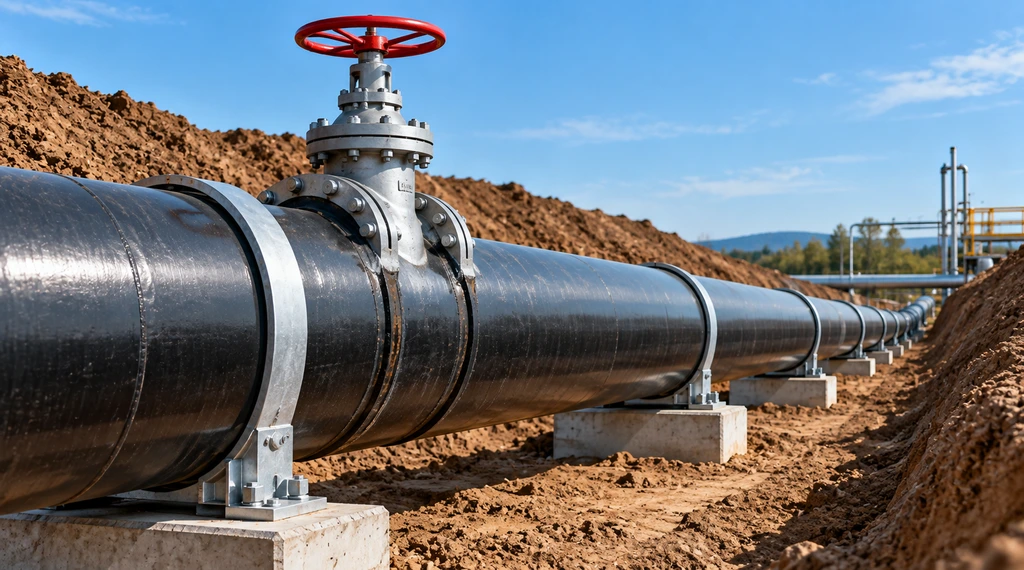
Threading, welding, grooving, clamps, transport damage, and field alterations may expose steel. Buried sections face soil moisture, contaminants, stray currents, and coating damage. The specification should define whether wrapping, additional coating, isolation, inspection, or another material is required.
Confirm Local Compliance and Required Documentation
Technical plausibility does not override local rules. Jurisdictions may restrict galvanized steel in new drinking-water systems, permit only defined uses or repairs, or require product-specific approval. Check national regulations, water authority requirements, the project specification, and approving authority before treating a manufacturing standard as permission to install.
The following documents answer different questions and should not be substituted for one another:
- The pipe product standard identifies how the pipe is manufactured and tested.
- The galvanizing requirement defines the coating process, coverage, or test basis.
- The MTC connects material results to a heat or production batch.
- Drinking-water contact evidence addresses the product’s intended hygienic use where required.
- Local approval determines whether the material is accepted in that installation.
A pipe may meet its manufacturing standard yet lack required drinking-water evidence. A general certificate also cannot compensate for an unidentified batch or unverified coating. Buyers considering galvanized steel pipe options should establish the regulatory route first. A BS 1387 galvanized ERW steel tube page identifies a product form and dimensional range, not potable-water approval in a particular country.
Decide Whether to Use, Retain, or Replace Galvanized Pipe
The decision should combine service, local law, water chemistry, coating evidence, pipe condition, and system interfaces. No single factor can carry the whole conclusion.
New projects should not approve galvanized steel merely because it was historically used for water, and existing pipe should not be condemned solely because of age. New selection requires evidence before purchase; retention requires evidence of actual condition. Any alternative material must still be checked against the service, temperature, pressure, water-contact, installation, and approval requirements.
Confirm the Product Specification and Traceable Records
If galvanized pipe remains viable, state the water service, destination country, product and coating requirements, temperature, dimensions, wall thickness, galvanizing route, zinc requirement, ends, exposure, inspection plan, and documents. For potable service, identify the required water-contact evidence instead of writing only “suitable for drinking water.”
The submitted MTC, coating report, certificates, and markings should refer to the same product and production batch. Missing traceability should be resolved before approval or shipment. This protects the buyer from receiving a pipe that meets a general manufacturing description but does not match the project’s water service, coating condition, or documentation requirements.
Baolai can review an enquiry against available galvanized pipe forms, dimensions, processing routes, and production documents. Providing the destination market, water service, applicable standard, water-contact requirement, dimensions, galvanizing method, coating requirement, end finish, and inspection documents helps identify specification gaps before an order is confirmed.
This review does not replace approval by the project engineer, water authority, or local regulator. It gives buyers a clearer product and document basis for comparing offers and reduces the risk of purchasing pipe that is manufacturable but unacceptable for the intended system. Discuss the required galvanized pipe for water supply before finalizing the specification.
Galvanized Pipe for Water Supply FAQ
Is New Galvanized Pipe Automatically Suitable for Drinking Water?
No. New pipe avoids age-related deterioration, but it still needs to be permitted locally, suitable for the actual water chemistry, and supported by the required water-contact and production evidence. Confirm these items before specifying it for potable service.
Does a Thicker Wall Make Galvanized Pipe Suitable for Potable Water?
No. Wall thickness affects mechanical capacity and corrosion allowance, but it does not replace an intact zinc coating, compatible water, suitable connections, or drinking-water approval. Review wall thickness and hygienic suitability as separate requirements.
Can Galvanized Pipe Be Connected Directly to Copper?
It should not be assumed suitable without review. Dissimilar metals can create galvanic corrosion, depending on water chemistry, temperature, component arrangement, and connection design. Confirm the applicable installation requirements and corrosion-control detail.
Can Existing Galvanized Pipe Be Retained if It Does Not Leak?
Possibly, but the absence of external leakage does not prove that the internal bore and coating remain acceptable. Check water quality, pressure, flow, maintenance history, and representative internal condition before deciding to retain it.
Does Brown Water Always Mean Galvanized Pipe Must Be Replaced?
Not necessarily. Brown water requires investigation, but its source may be upstream water, disturbed deposits, stagnation, or corrosion in another component. Compare samples, inspect the affected system, and identify the cause before choosing flushing, repair, or replacement.
Sources
- UK Drinking Water Inspectorate: recognized materials and restrictions affecting galvanized steel in public water supplies
- Ontario 2024 Building Code: jurisdiction-specific restrictions for galvanized steel water-distribution piping
- Health Canada corrosion guidance: corrosion and metal release in drinking-water distribution systems
- WHO drinking-water guidance: zinc behaviour and corrosion considerations for galvanized piping