A fire sprinkler pipe pressure rating cannot be confirmed from one number alone. A project may specify a working pressure, the pipe may be hydrostatically tested at a higher pressure, and the material may be supplied as Schedule 10 or Schedule 40 with UL Listing or FM Approval. These requirements are related, but they do not mean the same thing.
For buyers, the practical question is whether the exact pipe configuration meets the pressure, dimensional, connection, and certification requirements written into the project specification.
Start With the Pressure Requirement in the Project Specification
Before comparing pipes, first determine which pressure the project is asking the pipe and system to satisfy.
A specification may contain several pressure values. One may describe normal operation, another may relate to pump conditions, and another may be used during commissioning or hydrostatic testing. Selecting the highest number and treating it as the required working-pressure rating can lead to the wrong product decision.
Start by finding the value identified as working pressure, operating pressure, or design pressure, then check whether it applies to the entire sprinkler system, a specific pressure zone, or only one section of piping.
For example, if the project calls for 8 bar working pressure, DN 100 nominal diameter, ASTM A795 pipe, Schedule 10 wall thickness, grooved connections, and FM Approval, the task is not simply to find any Schedule 10 pipe that can exceed 8 bar. The offered pipe must also match the specified size, standard, connection method, and approval scope.
If the bill of quantities (BOQ) states only “fire sprinkler pipe, Schedule 40, UL/FM” but gives no working pressure, exact product standard, or connection requirement, the information is incomplete for a final product match. Those missing fields should be confirmed from the specification, drawings, data sheet, or responsible project team before production.
Separate Working Pressure From Hydrostatic Test Pressure
Working pressure relates to the pressure the piping system is expected to handle during service. It should not be assessed from the pipe wall alone because the installed pressure boundary also includes fittings, couplings, valves, and other connected components.
If the pipe itself is suitable for a higher pressure but a selected coupling or valve has a lower allowable limit, the higher capability of the pipe does not raise the limit of the complete assembly. The pipe and joining system therefore need to be checked together.
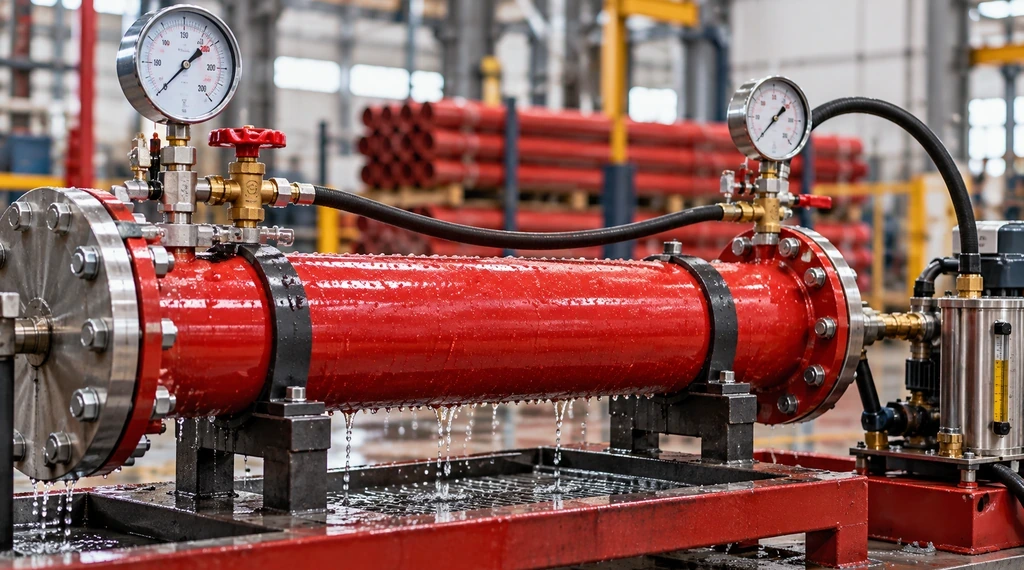
Hydrostatic testing serves a different purpose. At the mill, a pipe is subjected to defined test conditions to verify compliance with the applicable product standard or purchase specification. A field hydrostatic test evaluates an assembled piping system according to the governing project or installation procedure.
Passing a hydrostatic test at a certain pressure does not mean that the same value automatically becomes the permitted continuous working pressure. If a pipe is tested above the project’s normal operating pressure, the correct conclusion is that it passed the specified test under those conditions.
For more detail on mill test procedures and records, see the guide to hydrostatic testing for steel pipes.
Use Schedule to Confirm Wall Thickness, Not to Assign a Pressure Rating
Schedule is often used as a shortcut when comparing fire sprinkler pipe, but it is not a direct pressure rating.
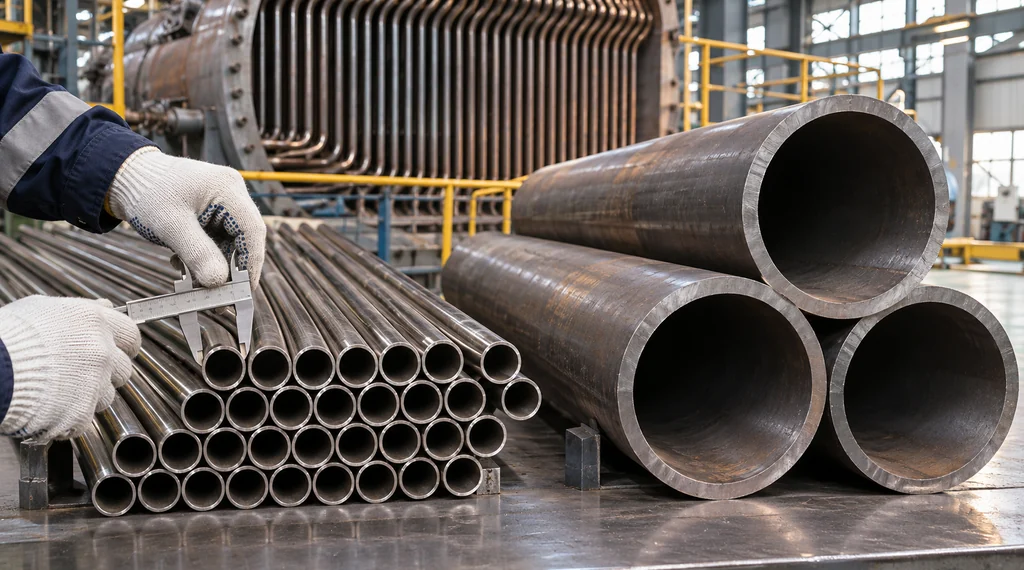
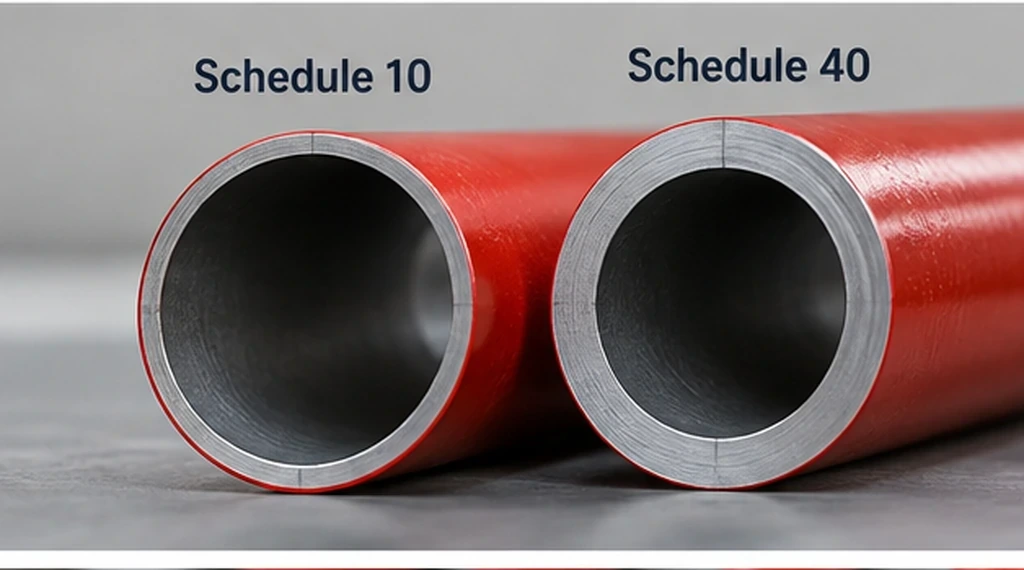
For the same nominal pipe size, changing the Schedule changes the specified wall thickness. Because the outside diameter for a particular nominal pipe size remains defined by the applicable dimensional system, a thicker wall generally creates a smaller internal diameter.
Same NPS → Different Schedule → Different wall thickness → Different internal diameter
Here, NPS means nominal pipe size, while DN refers to nominal diameter, another size designation widely used in international specifications.
Wall thickness affects weight, flow area, mechanical strength, and pressure capability, but it does not create one universal pressure value for every Schedule 10 or Schedule 40 pipe.
Instead of asking “What is the pressure rating of Schedule 40 pipe?”, ask whether the specified Schedule, at the required size and under the required product standard and connection method, meets the project’s pressure requirement.
The practical review is:
Size → actual wall thickness → product standard → connection → required pressure → certification
Schedule identifies the wall configuration. It does not replace the rest of the specification.
Confirm the Product Standard Before Comparing Similar Pipes
Two pipes can have the same nominal size and Schedule but still be supplied to different product standards.
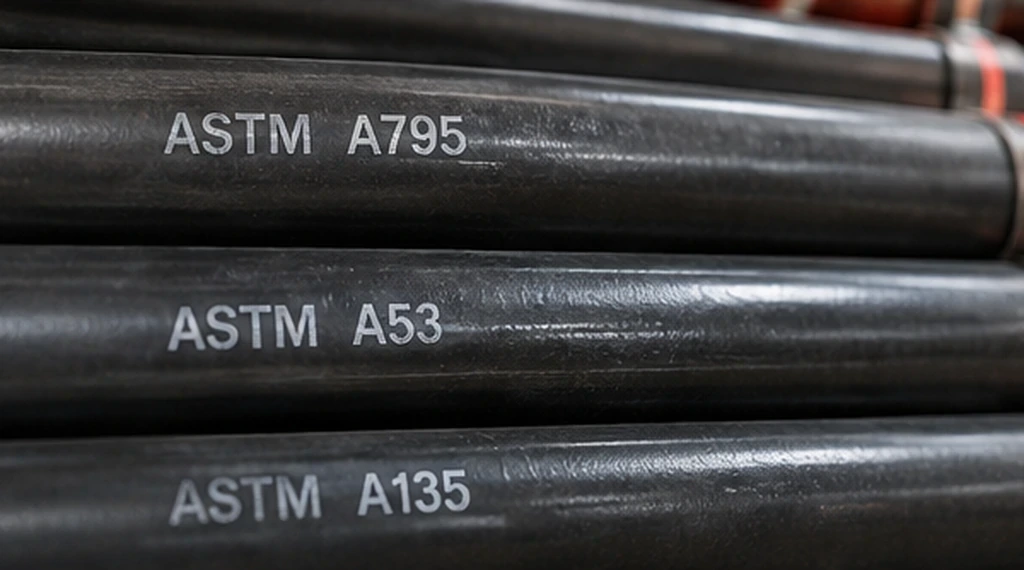
ASTM A795, ASTM A53, and ASTM A135 can all appear in fire protection projects, but they are not interchangeable simply because their dimensions may overlap. ASTM International publishes these standards, and each specification has its own scope and manufacturing requirements.
ASTM A795 is specifically intended for black and hot-dip galvanized welded and seamless steel pipe for fire protection use. ASTM A53 has a broader application scope, while ASTM A135 covers electric-resistance-welded steel pipe.
If the project specifies ASTM A795, offering ASTM A53 pipe with a similar size and wall thickness does not automatically satisfy the requirement. Any substitution should be permitted by the project specification or approved by the responsible authority. The same principle applies when an EN standard or another regional standard is specified.
The purchasing rule is straightforward: match the required product standard first, then compare pressure and dimensions within that approved product route.
Treat UL/FM as a Product-Specific Check
A specification such as ASTM A795 + Schedule 10 + UL Listing/FM Approval contains separate requirements.
The ASTM standard defines the product requirements, Schedule 10 identifies the wall configuration, and UL Listing or FM Approval applies to defined products and conditions.
That means asking only “Does your factory have UL/FM?” is too broad. The buyer should check whether the required certification applies to the specific pipe being offered.
The review should match the manufacturer or manufacturing source, product designation, covered size range, Schedule or wall thickness, applicable standard, any stated pressure or application limitations, and required markings against the project requirement.
If an approval covers only certain sizes or pipe constructions, another pipe from the same manufacturer should not automatically be treated as covered.
Certification requirements also vary by country, insurer, project owner, and approving authority. For international projects, follow the approved project specification and local acceptance requirements rather than assuming that UL Listing or FM Approval is required—or sufficient—for every market.
Include the Connection Method in the Pressure Review
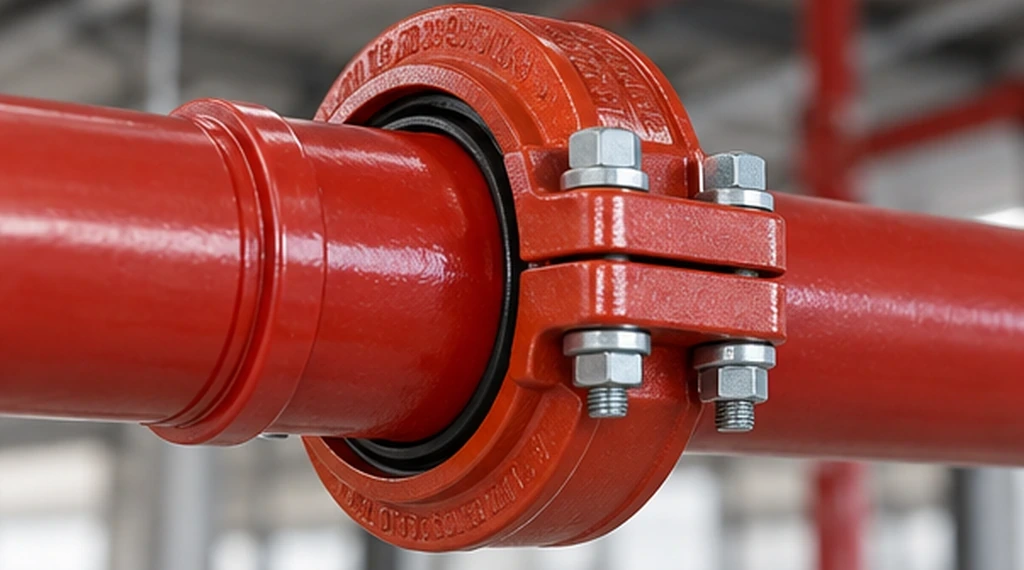
Fire sprinkler pipe may be supplied for grooved, threaded, or welded connections, with plain or beveled ends used where required. The suitable method depends on pipe dimensions, wall thickness, product standard, and the associated fitting system.
Suppose a project requires grooved DN 100 pipe. Confirming ASTM A795 and Schedule 10 is not enough. The pipe dimensions must suit the specified groove preparation, and the selected coupling system must meet the required service pressure and approval conditions.
The same logic applies to threaded systems. The selected size and wall configuration should be suitable for the intended threading method rather than assumed compatible because the pipe meets the required Schedule.
The practical rule is simple: do not use the pressure capability of the bare pipe as the rating of the complete installed system.
Compare the Complete Specification With Available Pipe Options
Only after the pressure, size, Schedule, product standard, connection, and certification requirements are clear should the buyer compare available products.
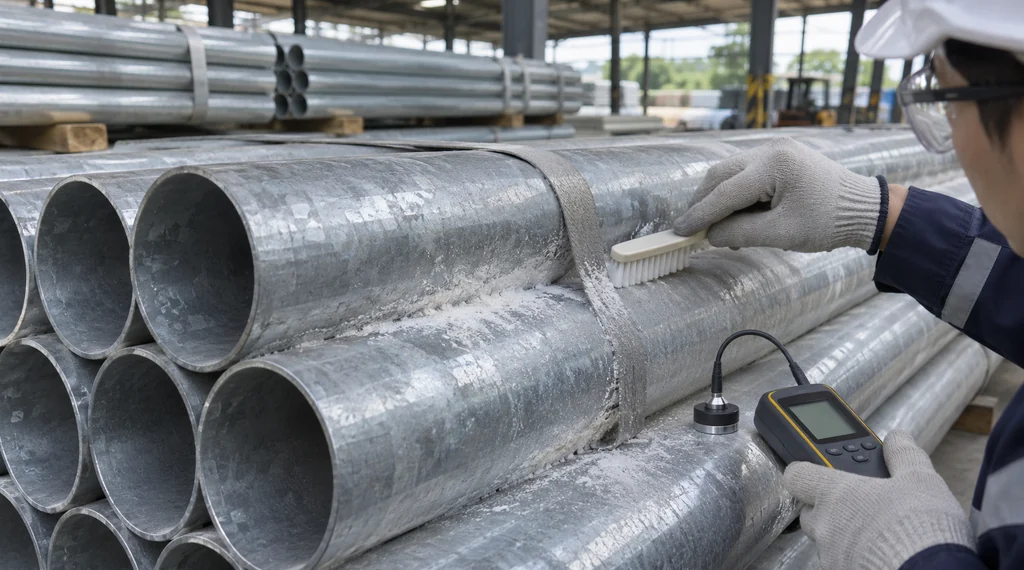
The available fire sprinkler pipe options cover different standards, dimensions, surface treatments, and end preparations for international fire protection projects.
For example, an ASTM A795 ERW fire sprinkler pipe may be available in Grade A or Grade B, Schedule 10 or Schedule 40, with different end preparations and certification options.
The product review should still follow the complete requirement:
Required standard → correct size → correct Schedule → working pressure → certification scope → connection → surface finish → documentation
If one item does not match, the specification is not fully satisfied simply because the remaining items do.
Use a Final Check Before Ordering
Before confirming an order, the buyer should be able to answer these questions without relying on assumptions:
| Check | Question to answer |
| Pressure | What working or design pressure must the system meet? |
| Size | What nominal diameter (DN) or nominal pipe size (NPS) is required? |
| Wall | Which Schedule or exact wall thickness is specified? |
| Standard | Which ASTM, EN, or other product standard applies? |
| Connection | Grooved, threaded, welded, or another method? |
| Certification | Which listing, approval, or local acceptance is required? |
| Surface | Black, galvanized, painted, or another finish? |
| Documents | Which material test certificates (MTCs), approval documents, or inspection records are required? |
If the project documents conflict—for example, one drawing specifies Schedule 10 while a procurement sheet specifies Schedule 40—the difference should be resolved before production. The same applies when certification is requested without identifying the applicable product, size, or approval condition.
The goal is to make sure the pipe delivered, marked, documented, and installed is the pipe the project actually specified.
Resolve Missing Requirements Before Procurement
Specifications such as “fire sprinkler pipe, Schedule 40, UL/FM” may look detailed but can still leave major decisions unresolved. Without the required pressure, exact standard, size, connection, surface finish, and applicable certification scope, several different products could fit the same short description.
These gaps should be clarified before production rather than interpreted after the order is placed.
BAOLAI Steel supplies fire sprinkler pipe across different standards, dimensions, finishes, and end configurations for international projects. Where a bill of quantities, data sheet, or purchase specification contains unclear pressure, Schedule, certification, or documentation requirements, buyers can confirm the fire sprinkler pipe specification with BAOLAI before the order is finalized.
FAQs
Is Schedule 40 fire sprinkler pipe always rated for a higher working pressure than Schedule 10?
Schedule 40 normally has a thicker wall than Schedule 10 for the same nominal size, but Schedule alone does not establish the allowable working pressure. The actual size, material, product standard, connection system, and applicable certification still need to be checked.
Is hydrostatic test pressure the same as working pressure?
No. Hydrostatic test pressure is applied under defined test conditions to verify specified acceptance requirements. Working pressure relates to service conditions. Passing a higher-pressure test does not make that test value the continuous operating pressure.
Does UL or FM certification give every fire sprinkler pipe the same pressure rating?
No. UL Listing and FM Approval apply to defined products and conditions. Buyers should verify the specific product, size, wall configuration, manufacturer, and any applicable pressure or application limitations rather than relying only on a certification mark.