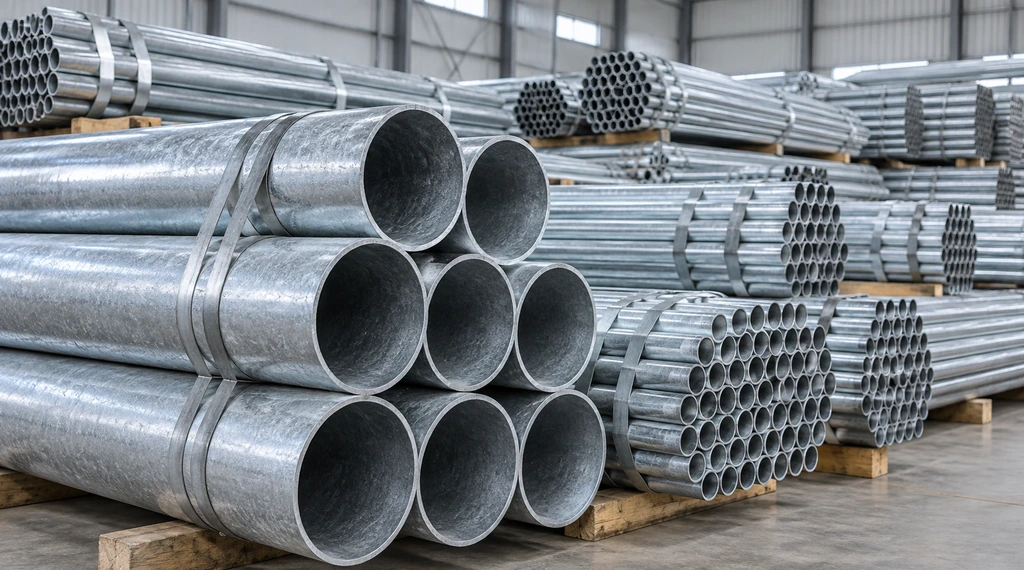
A fire sprinkler pipe submittal can contain dozens of pages and still fail to prove that the documents describe the pipe being delivered. A certificate may cover the wrong factory, an MTC may not match the marked heat number, or coating literature may not prove application to the ordered pipe. When these gaps appear late, approval slows and the review may have to be repeated.
The solution is to build a traceable line from the purchase requirement to the product, batch, test result, coating record, and shipment. This checklist explains how to identify missing or mismatched evidence and reach a clear disposition before approval.
Start With the Project-Specific Fire Sprinkler Pipe Submittal Requirements
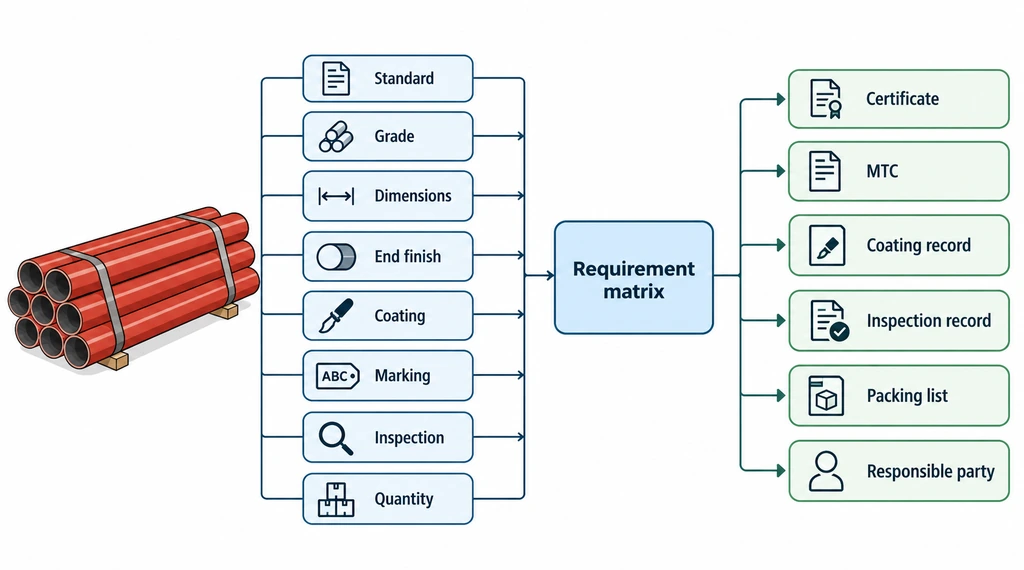
Review should begin with the order and project requirements, not with the files supplied by the manufacturer. Otherwise, the reviewer can spend time checking documents that look complete but do not answer the project’s actual acceptance questions. First define the purchased pipe: product standard, grade, dimensions, manufacturing route, end finish, coating, marking, inspection level, and quantity. Then identify the document that must demonstrate each requirement. International projects should follow their purchase specification, approved material schedule, applicable product standard, and agreed deviations rather than importing another market’s approval practices.
The product submittal also needs a clear boundary. It can demonstrate what the pipe is and whether its production and inspection match the order, but it does not approve hydraulic calculations, system layout, sprinkler selection, installation design, or site acceptance. Mixing these responsibilities obscures who must close a missing record. A requirement matrix solves this problem by connecting each ordered characteristic with its evidence and responsible party. Buyers reviewing fire sprinkler pipe options can use it to separate product selection from batch verification and create a project-specific review basis rather than copying a checklist from another order.
Check the Certificate Scope Against the Ordered Pipe
Certificates often receive a quick visual check because they appear official. Yet a genuine certificate can be irrelevant when it names another entity, factory, or product family, or has expired.
For each certificate, verify the following independently:
- Issuing organization and certificate number
- Certificate holder and manufacturing location
- Covered product and manufacturing route
- Referenced standard, grade, or dimensional range
- Issue date, expiry date, and current status
- Any exclusions or conditions that limit the stated scope
This review should end with a decision, not a tick mark. If the certificate clearly covers the manufacturer and ordered product, it can support the package. If the scope is ambiguous, request clarification or evidence from the issuing body. If it covers a different product or site, it should not be used to imply approval of the ordered pipe. Different certificates also prove different things: a quality-management certificate does not replace product conformity evidence, while a product certificate covering an assessed range does not replace the MTC for a production batch. Project-specific approval must likewise be checked against the scope claimed.
Trace Each MTC to the Fire Sprinkler Pipe and Production Batch
The material test certificate moves the review from general company or product credentials to the material actually produced, so its value depends on traceability. Chemical and mechanical results are not useful if the reviewer cannot connect them to the heat, batch, pipe markings, and shipment quantity under review. The manufacturer, order reference, specification, grade, dimensions, manufacturing route, quantity, and heat or batch number should agree with the commercial and technical records. The reviewer can then compare the reported results with the acceptance basis and connect the MTC to the pipe marking, packing list, and shipment documents.
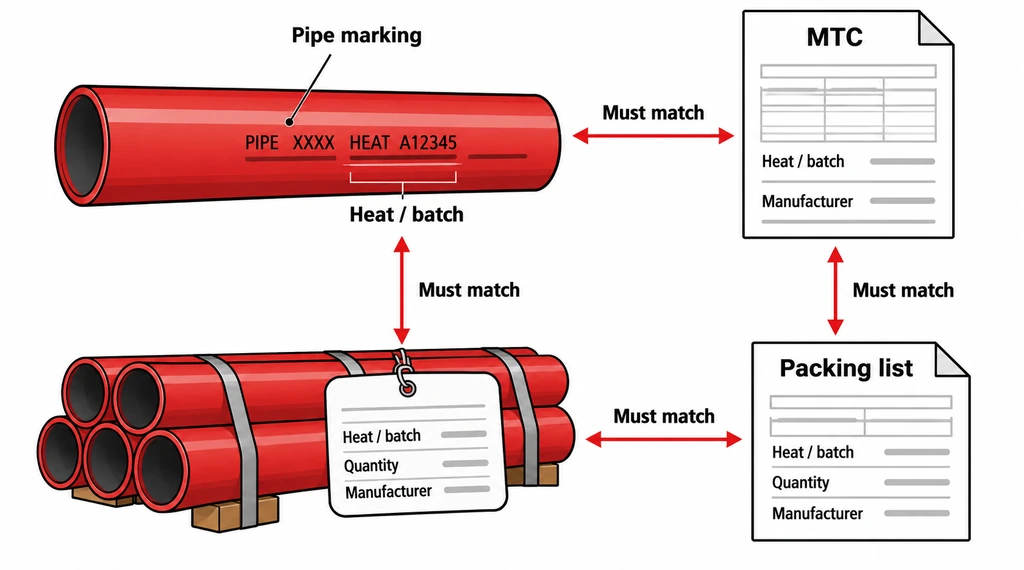
Multiple batches require multiple traceability paths. A common cover sheet cannot make one MTC representative of unrelated heats. For split shipments, each quantity must map to its batch and MTC.
Separate Coating System Evidence From Batch Application Records
Coating documentation has two separate jobs. It must show that the proposed coating system meets the specified application requirements, and it must show that the system was applied and inspected on the supplied pipe.
- System-level evidence may include the coating product data sheet, declared properties, compatibility information, application limits, surface-preparation requirements, and curing instructions.
- Production-level evidence may include coating batch identification, application records, surface-preparation results, dry-film thickness measurements, cure records, visual inspection, and holiday testing where required by the approved specification.
Both levels matter. A manufacturer’s coating brochure may help confirm the proposed material, but it does not prove that the correct product and application process were used for a specific pipe batch. Conversely, a thickness report with no order, batch, or pipe identification may contain real measurements but still fail the traceability test.
The coating description must remain consistent across the order, technical data, supplementary records, inspection report, and applicable markings. An EN 10216-1 seamless FBE-coated fire fighting pipe submittal should not alternate between painted pipe, FBE, and another finish without explanation. When the approved external protection system calls for detailed production verification, the 3LPE and FBE coating inspection checklist can help reviewers distinguish application records from general coating literature. The decisive question remains whether the submitted evidence is both technically relevant and traceable to the supplied batch.
Verify Actual Inspection Results for the Supplied Pipe
An inspection procedure explains how a check is supposed to be performed, whereas an inspection record shows what was actually checked and what result was obtained. Submitting the procedure alone therefore does not demonstrate that the delivered pipe passed inspection. A usable record identifies the order or product, batch or heat, inspected quantity, test method, acceptance criteria, relevant test conditions, actual result, inspection date, and responsible party. Depending on the ordered product and agreed scope, it may cover dimensions, visual condition, hydrostatic testing, nondestructive examination, end preparation, coating thickness, coating continuity, or final marking and packing.
The evidence should form a sequence: the requirement establishes what must be inspected, the procedure defines the method, the report identifies the batch and result, and the disposition shows whether the material passed, was reinspected, or remains unresolved. A report marked only “pass” is weak when it omits the tested batch, inspected quantity, recorded value, or acceptance basis. More pages do not solve that problem; the missing link must be restored so the result can be connected to the delivered pipe.
Assemble and Validate a Traceable Fire Sprinkler Pipe Submittal Package
Once individual records have been reviewed, they must operate as one package. A useful document index should identify the document number, title, revision, relevant order item, heat or batch where applicable, and review status. Consistent identifiers allow the buyer to move from the purchase requirement to the technical document, production evidence, inspection result, packing list, and physical marking without guessing.
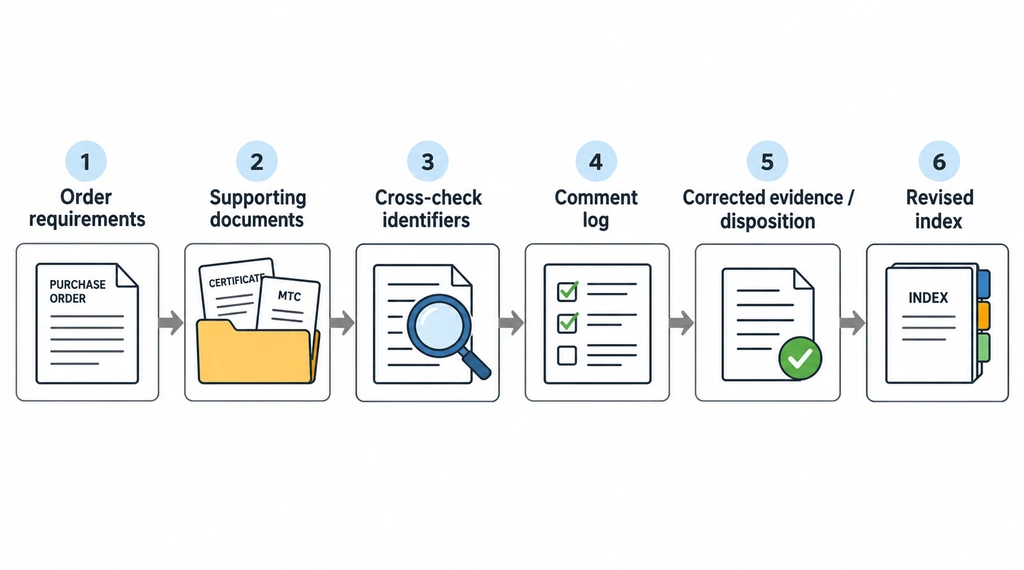
The package can be assembled through one controlled sequence:
- Freeze the applicable order and technical requirements.
- Map every required item to its supporting document.
- Cross-check manufacturer, product, standard, grade, dimensions, coating, and batch identifiers.
- Record omissions and conflicts in one comment log.
- Resolve each gap with corrected evidence, clarification, or a formal disposition.
- Issue a revised index showing which documents changed and which review comments were closed.
Discrepancies have different consequences. A file-name error may be administrative; an expired certificate needs current scope evidence; a heat-number conflict breaks MTC traceability; and a grade or standard mismatch may mean the document or material does not meet the order. The action should reflect that risk, and the correction must remain visible through clear document numbers and revision histories. Silent replacements and conflicting versions force comparisons to restart, while a controlled package enables faster gap identification, fewer review cycles, clearer receiving checks, and less risk of approving unsupported material.
Baolai can organize available product, material, coating, and inspection records around the confirmed order scope. The most useful starting information is the required standard, grade, dimensions, end finish, coating system, inspection level, shipment arrangement, and purchaser document list.
Providing these requirements early gives the buyer a clearer view of which records can accompany the order, where project-specific evidence may still be needed, and which inconsistencies should be resolved before production or shipment. To align the product and document scope for an upcoming enquiry, you can confirm fire sprinkler pipe submittal requirements with the Baolai team.
Fire Sprinkler Pipe Submittal FAQ
Can One Submittal Package Cover Multiple Shipments?
A common technical section can cover shared product information, but batch-specific evidence must remain separate and identifiable. Each shipment should be traceable to the relevant heats, MTCs, coating records, inspection reports, and quantities. A cover sheet does not eliminate the need for that mapping.
Are Electronic Certificates Acceptable?
Electronic format alone does not make a record inadequate. Review authenticity, legibility, revision status, issuer, and traceability as for a paper document. Any verification link should show the same scope and identifiers as the submitted file.
What if Another Company Processes or Coats the Pipe?
The package should identify the original pipe manufacturer and the downstream processor, state which party performed each operation, and include the applicable processing and inspection records. Product identity must be preserved through the transfer so the finished pipe can still be linked to the original material evidence.
Can Translated Certificates Be Used?
A translation can assist review, but the original issuer’s document should remain in the package. Names, certificate numbers, scope, dates, and verification details must remain checkable, and the translation should be clearly identified.
How Should Confidential Information Be Handled?
The buyer and supplier should agree before submission on the evidence required, permitted redactions, and document-control method. Confidential commercial details may sometimes be separated, but redaction should not remove the product, batch, result, issuer, or other identifiers needed to verify conformity and traceability.